If you’ve ever wandered through a utility vault after a rare summer thunderstorm, or stood next to a power line that’s been running steady for decades, you’ve probably never given a second thought to the thin, yellowish paper tucked inside those cables. For me, though, that paper is the heart of what we do here—we’re one of the few suppliers focused entirely on paper made specifically for the cable industry, and I’ve spent the last 12 years in this field learning exactly how that paper works, why it matters, and why it’s still irreplaceable even in an era of synthetic insulators. Paper for The Cable Industry
Let’s start with the basics. Cable insulation is all about stopping electricity from leaking where it’s not supposed to. Think of a high-voltage power cable: it carries thousands of volts from a substation to a neighborhood, and if that electricity escapes to the metal sheath, the surrounding soil, or even other cables, it’s not just inefficient—it’s dangerous. The material between the conductor and that sheath has to do three key things: it has to resist electrical current flow, it has to hold up to extreme temperatures (some cables sit in permafrost, others near power plants that run hot), and it has to last for decades, often in harsh, wet environments. That’s where paper for cables comes in, and it’s not the same as the notebook paper you used in school.
Cable paper is a specially processed cellulose product, made from wood pulp refined to remove impurities, treated to be moisture-resistant yet still flexible, and layered to create a dense, uniform barrier. Its insulation property comes down to two core electrical characteristics: dielectric strength and volume resistivity. Dielectric strength is the measure of how much voltage a material can withstand before it breaks down and becomes conductive—for standard cable paper, that’s around 20 to 40 kilovolts per millimeter, which is higher than many common plastics used in lower-voltage cables. Volume resistivity is how well a material resists the flow of electrical current through its bulk, and cable paper clocks in at over 10¹⁴ ohm-centimeters when dry, which is far more than enough to stop low to medium voltage leaks, and even holds its own for high-voltage applications.
What makes cable paper unique compared to synthetic insulators is how it behaves over time, especially in the conditions most cables live in. Synthetic polymers like PVC or polyethylene are great for some uses, but they break down when exposed to oil, high heat, or the constant mechanical stress of being buried, pulled through ducts, or bent around corners. Cable paper, when properly impregnated with mineral oil or synthetic resin, becomes a tight, cohesive barrier that actually adapts to the cable’s shape. The oil fills in any tiny gaps in the paper’s fibers, eliminating air pockets that would weaken insulation and cause partial discharges over time. Those partial discharges are one of the biggest silent killers of cables—they start small, erode insulation from the inside out, and eventually lead to a full failure. Impregnated cable paper drastically reduces that risk because there’s almost no air left to spark.
I’ve seen this play out firsthand. A few years back, a regional utility company called us because a 20-year-old high-voltage cable they had buried near a river was failing unexpectedly. They replaced it with a synthetic-insulated cable, and within three years, that new cable was having the same issue—air pockets in the synthetic insulation had formed during installation, and partial discharges were eating away at it. We helped them source and install a cable with our paper insulation, properly impregnated with a specialized oil that resists river moisture. That cable is still running today, 10 years later, with zero insulation issues. That’s the kind of real-world performance that makes our paper so valuable.
But insulation isn’t just about electrical properties—thermal insulation matters too, and cable paper excels here as well. Cellulose has a naturally low thermal conductivity, which means it helps regulate the temperature of the conductor inside the cable. When current flows through a cable, the conductor heats up, and too much heat accelerates the degradation of any insulation. Our cable paper, when layered around the conductor, creates a barrier that slows heat transfer to the outer sheath, keeping the insulation at a more consistent temperature. This is especially important for urban cables that are buried close together in ducts—they heat each other up, and good thermal insulation extends the life of both the cable and the paper.
Of course, no material is perfect, and cable paper has limitations. The biggest one is moisture. If cable paper gets wet before it’s impregnated, the moisture breaks down its dielectric strength and volume resistivity, turning it from a good insulator into a poor one. That’s why our manufacturing process is strictly controlled: every roll of cable paper we produce is kept in climate-controlled storage until it’s ready to be shipped, and we work directly with cable installers to provide best practices for handling on-site—keeping rolls covered, avoiding immersion in water during installation, and getting them impregnated quickly. Another limitation is that it’s not ideal for very high-frequency cables, where synthetic insulators like PTFE work better, but for the vast majority of power, telecommunications, and distribution cables, paper outperforms synthetics over a 30+ year lifespan.
What’s most surprising to people new to the cable industry is that paper for cables is still a growing market. A lot of engineers I talk to assumed it was phased out decades ago, but as we push for more resilient power grids and longer-lasting infrastructure, cable paper is making a comeback. Utilities are realizing that synthetic cables, while cheaper upfront, have a shorter lifespan and higher long-term maintenance costs. Cable paper, when properly specified and installed, can last 50 years or more with minimal upkeep. It’s also more sustainable than many synthetics—cellulose is a renewable resource, and at the end of a cable’s life, the paper can be recycled, whereas synthetics often end up in landfills. That’s a big plus for companies working to meet ESG goals.
As a supplier, that’s why we focus on every detail of our paper. We don’t sell generic paper—we test every batch for uniformity, moisture content, and dielectric strength before it leaves our facility. We work closely with cable manufacturers, taking their specific requirements for voltage rating, installation environment, and lifespan into account to tailor the paper we provide. Last year, we developed a new formulation that’s treated with a moisture-resistant coating that gives installers more flexibility—they can work in slightly damp conditions without rushing to impregnate the cable, which cuts down on installation time and cost.
If you’re a utility manager, cable manufacturer, or installer working on a new project or upgrading an aging grid, I hope this gives you a better understanding of why cable paper is such a critical part of the cable ecosystem. It’s not just old technology—it’s a proven, reliable insulation material that solves problems that synthetics can’t. For more than a century, paper has been insulating the cables that power our homes, hospitals, and businesses, and it’s still the best choice for many applications today.
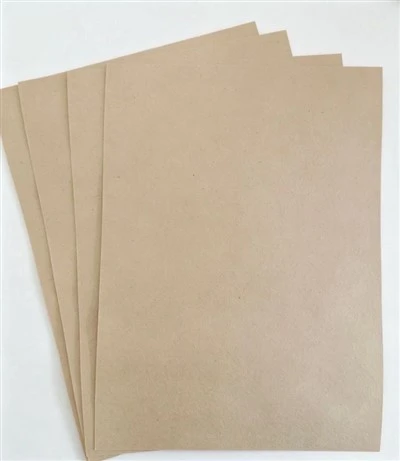
If you’re looking to source high-quality, industry-specific cable paper for your next project, we’d be happy to discuss your needs in detail. We offer customized solutions, bulk pricing for large projects, and technical support to make sure you get the right product for your specific application.
Mulch Film Paper References
- Kreuger, F. H. (1991). Impregnated Paper Insulation for High-Voltage Cables. Elsevier Science Publishers.
- Harting, J. (2005). “Cellulose Insulation for Power Cables: Past, Present, and Future.” IEEE Transactions on Dielectrics and Electrical Insulation, vol. 12, no. 5, pp. 862-872.
- National Electrical Manufacturers Association (NEMA). (2018). Standard for Cellulose Insulating Paper for Power Cables, NEMA CP 1-2018.
- Wang, L., et al. (2020). “Moisture Effects on Dielectric Properties of Impregnated Cable Paper.” IEEE Electrical Insulation Magazine, vol. 36, no. 3, pp. 18-25.
Shanghai Rongying Industrial Co., Ltd.
As one of the most professional paper for the cable industry manufacturers and suppliers in China, we’re featured by quality products and good price. Please rest assured to wholesale customized paper for the cable industry from our factory. If you have any enquiry about quotation and free sample, please feel free to email us.
Address: Jiahua Business Center C building 204 room, No.808 Hongqiao Road,Xuhui District,Shanghai,China
E-mail: info@shryspecialtypaper.com
WebSite: https://www.woolpaper.com/
