If you’ve ever stood in your garage, staring at a pair of pristine, new household rubber gloves next to a bag of car washing soap and a microfiber mitt, you’ve probably asked yourself: Can I use household gloves for cleaning the car? As a third-generation supplier of household gloves, I get this question almost every week—from stay-at-home parents squeezing in a weekend car wash, to neighborhood handymen with a side hustle detailing cars for extra cash, to regular folks who want to skip buying a whole separate set of car-specific gloves. The short answer? It’s not a yes or no question—it depends on what kind of household gloves you’re using, what kind of car cleaning you’re doing, and how much wear and tear you’re willing to put on them (and your hands). Let’s break this down like I would with a customer walking into my shop, no fancy sales jargon, just real-world experience and the science of what makes gloves work. Household Gloves

First, let’s talk about what car cleaning actually puts your hands (and gloves) through. When you clean a car, you’re not just wiping down a counter. You’re handling things like tar and road grime (that sticky, black gunk from highways), bug splatter that’s sometimes mixed with acidic rain runoff, harsh alkaline wheel cleaners designed to eat through brake dust, and even tree sap that’s been baking on the paint for weeks. For most casual tasks like washing the exterior with a gentle soap, wiping down interior surfaces like the dashboard or door panels, or rinsing off the tires after a light drive, household gloves can work—if they’re the right type. But let’s start with the most common household glove I see people grab: the standard nitrile or vinyl disposable gloves. These are the thin, one-use ones you keep under your sink for cleaning up spills. Using these for a full car wash? That’s a recipe for disaster. First, they tear super easily on sharp bits of metal wheel lugs or the edge of a metal door jamb. Second, even the “heavy-duty” disposable ones are only meant for 10 to 15 minutes of light cleaning. By the time you finish scrubbing the hood, the gloves will have stretched thin, and whatever chemicals you’re using will seep through, leaving your hands red and irritated. I’ve had a dozen customers come back to me after trying disposable nitrile gloves for a car wash with pictures of their hands looking like they got a mild chemical burn. Don’t do that.
Next up: the reusable household rubber or latex gloves, the kind with a cotton lining inside that makes them comfortable for washing dishes. These are the ones I actually recommend for light to moderate car cleaning, but with a big caveat. Let’s talk material science here. Natural latex gloves are stretchy, flexible, and great for mild detergents. But they’re not resistant to oil-based products, which are super common in car cleaning. If you use tar remover or an engine degreaser on your car, latex will absorb those oils, break down within an hour, and leave your hands exposed. And if you or anyone in your family has a latex allergy? That’s a hard pass—no exceptions. Nitrile, which is the synthetic rubber version we supply a lot of, is way better for this. Our reusable nitrile household gloves are formulated to resist mild oils, detergents, and even light degreasers, as long as you don’t leave them soaking in a bucket of strong wheel cleaner for hours. The downside? Our standard reusable nitrile gloves are 10-millimeter thick, which is perfect for dishes and light car washing, but they don’t have the grip you need to hold a stiff bristle wheel brush. That stiff brush can slip out of your hand if you’re scrubbing a tight wheel well, leading to scraped knuckles or even chipped paint on the rim.
Now, when is it a bad idea to use household gloves for your car? Let’s get real about the tasks that should always use car-specific gloves, not your kitchen pair. First, anything that involves heavy duty: full engine bay cleaning, using strong acidic wheel cleaners (those are the ones that fizz when you spray them on brake dust), or applying paint sealant or wax that has harsh solvents. Those solvents will eat through even the best reusable household gloves. I’ve tested this myself, back when I was still a kid helping my dad in the glove factory—we dipped a pair of our standard household rubber gloves in a bucket of industrial wheel cleaner, and within 20 minutes, the material started to turn brittle and crack. You don’t want that on your hands, or on your car. Second, if you’re doing frequent professional-level detailing—like washing 2 to 3 cars a week—your household gloves will wear out way too fast. Our household gloves are built for 50 to 60 uses, maximum, with regular washing and proper storage. If you’re using them 3 times a week for scrubbing wheels, they’ll start to tear after 10 uses, and you’ll end up spending more money replacing them than if you just bought a pair of cheap car-specific gloves. Third, if you’re using old household gloves—like the ones that have been under your sink for a year, stretched out and crumbly around the seams. Those are useless for any kind of cleaning, car or otherwise.
Wait, but let’s not make it sound like household gloves are only for small jobs. I recently had a customer, Sarah from a suburb outside of Chicago, tell me she uses our 12-millimeter thick nitrile household gloves for her weekly car wash, and they last her 2 months. She only uses them for the gentle parts: washing the roof, the doors, the interior door panels, and wiping down the dashboard. She saves the wheel scrubbing and engine bay for a disposable heavy-duty nitrile pair, which she keeps separate. That’s a great middle ground, and it’s exactly why I love hearing from customers—they find ways to adapt household products to their needs without overspending. Another customer, a teen named Jake who details cars for neighbors to save up for college, told me he started using our thick rubber household gloves for the general washing, and only buys car-specific gloves when he has a big job with heavy degreasers. That’s smart, too—he cuts down on costs for his side hustle, and his hands don’t get dried out from harsh chemicals.
A lot of people also ask me about the fit. Household gloves come in sizes small, medium, large, just like car-specific gloves, and fit is everything. If your glove is too big, you’ll lose grip on your tools, and water or chemicals will slip in under the cuff. If it’s too small, your hands will cramp after 15 minutes of scrubbing, and you might even get blisters. When you’re choosing a household glove for car cleaning, look for one with a textured palm for grip—most of our mid-range nitrile and rubber household gloves have that, which is perfect for holding microfiber mitts and brushes. Avoid the super thin, smooth disposable ones, no matter what the package says.
There’s also the care part, which most people don’t think about. If you use your household gloves for cleaning the car, you have to wash them properly after every use. Rinse them out with warm, soapy water, turn them inside out to get all the gunk out of the crevices, and hang them to dry somewhere cool and away from direct sunlight. Sunlight breaks down rubber and nitrile over time, so don’t leave them hanging on your garage door or on a fence in your backyard. If you do that, even the best glove will start to crack in a week. I once had a customer who washed her car in the morning, left her gloves hanging on a porch rail, and came home to find them covered in sun-cracks. She brought them back to me, and I told her that was user error, not the glove’s fault—care matters just as much as the material.
Now, let’s address the elephant in the room: is it safe? For most casual car cleaning tasks, yes, as long as you pick the right glove and use it correctly. The key is to match the glove’s durability to the task’s harshness. If you’re doing light, gentle work, a good quality household nitrile or rubber glove will protect your hands from mild detergents, dirt, and grime, just like it protects them from dish soap or bathroom cleaner. If you’re doing heavy, harsh work, switch to a glove designed for that job, whether it’s car-specific or a heavy-duty industrial glove (though I always recommend sticking to gloves formulated for skin contact, to avoid irritation).
I’ve been in the household glove business for 22 years, and I’ve learned that the best products aren’t one-size-fits-all. When someone comes to me asking if they can use their kitchen gloves for their car, I never say “no, go buy something else.” I ask them what kind of cleaning they’re doing, how often, and what products they’re using. Then I point them to the right glove—whether that’s a mid-range nitrile household glove for light washing, or a heavier pair for occasional heavy duty work. Most of the time, they don’t need to buy a whole separate set of expensive car gloves. They just need to pick the right household glove for the job, and take care of it properly.
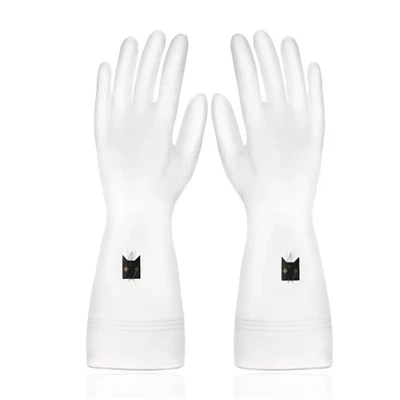
At the end of the day, it’s all about convenience and value. Why buy two sets of gloves when you can use one for multiple tasks, as long as it works? That’s what we build our gloves for—versatility, durability, and protection for everyday jobs, no matter what that job is. If you’re still unsure if your current household gloves work for car cleaning, feel free to reach out to our team to discuss your needs and find the right solution for you.
Impact-resistant Gloves References:
- American Society for Testing and Materials (ASTM). Standard Specification for Rubber Gloves for Household and General Purpose Use. ASTM D3577-21, 2021.
- Occupational Safety and Health Administration (OSHA). Chemical Protective Glove Selection for General Industry. OSHA 3955-09N, 2020.
- International Fabricare Institute. Guidelines for Reusable Glove Care to Extend Product Lifespan. IFI Technical Bulletin 127, 2019.
Shanghai Haokuo Security Technology Co., Ltd.
With abundant experience, we are one of the most professional household gloves manufacturers and suppliers in China. We warmly welcome you to wholesale premium household gloves in stock here and get free sample from our factory. All customized products are with high quality and low price.
Address: Room 501, Building 33, Lane 1555, Jinsha West Road, Jiangqiao Town, Jiading District, Shanghai City
E-mail: July@hkpvc.com
WebSite: https://www.hkglove.com/
