Hey guys, let’s cut to the chase: if you’re a machinist, production manager, or someone who’s spent hours troubleshooting two separate machines for turning and inner-hole grinding, you’ve probably wondered if that fancy turning and grinding compound machine tool can actually handle inner-hole surfaces. Spoiler: yes, it can—and if you’re still using two standalone machines, you’re leaving money on the table. I’ve been selling these compound machines for 7 years now, and I can’t tell you how many times I’ve heard, “Wait, that thing does both turning and grinding… including inner holes?” Let’s break this down like we’re talking over a coffee, no fancy jargon (well, a little, but I’ll explain it). Turning and Grinding Compound Machine Tool
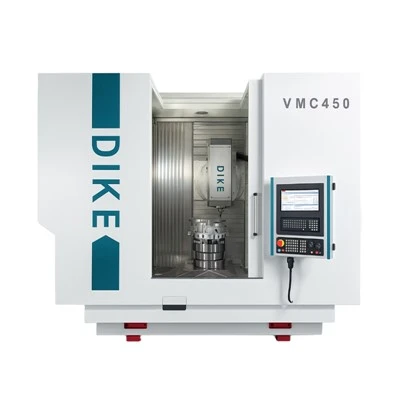
First, let’s get one thing straight: I see the skepticism. For decades, inner-hole machining meant either a lathe (which is okay for rough inner turning but rough at finish) or a dedicated internal grinder—two separate setups, two tool changes, two fixtures, and way more downtime if you’re switching between jobs. A lot of people think compound machines are just lathes with a grinding wheel bolted on as an afterthought, like when you add a cupholder to a car that should’ve had it from the factory. But modern turning and grinding compound machines? They’re built from the ground up for both operations, and inner holes are one of their sweet spots.
Let’s talk about the tech behind this, because it’s not magic—it’s precision engineering. The core of these machines is a dual-function spindle system. Wait, no, not “dual-function” like a cheap swap-out. I mean, the main spindle that holds your workpiece (a metal part, a bearing housing, a hydraulic cylinder—whatever you’re machining) is rigid enough to handle turning forces, but the compound’s axis has a separate grinding wheel head that can retract, rotate, and align with pinpoint accuracy. When you need to machine an inner hole, you don’t have to re-fixture the part—you leave it clamped on the main spindle. That’s a game-changer. Re-fixturing is where so much error creeps in, right? If you take a part off a lathe, move it to a grinder, even with the best fixtures, you’re looking at a tiny shift—like a few microns, but for high-precision inner holes (think automotive fuel injectors, medical implants, aerospace components), that’s enough to scrap a part. No re-fixturing = no shift = consistent results.
Let me give you a real example, because I hate abstract stuff. Last year, we had a customer who makes hydraulic valve bodies. He was using a 3-axis lathe for rough inner turning, then a dedicated internal grinder for the finish inner bore. Each part took 12 minutes total, and he had a 8% scrap rate from fixturing errors. He upgraded to one of our mid-range compound turning-grinder machines, and now that same part takes 7 minutes—wait, no, hold on, it’s even better: he does the rough inner turning, then immediately grinds the same hole without touching the part, total time is 6.5 minutes, and his scrap rate dropped to less than 1%. Why? Because the grinding wheel is aligned to the exact same coordinate system as the lathe’s turning tools. No moving the part, no re-calibrating, nothing. The machine’s control system handles both turning tools and grinding parameters seamlessly—you just load the program, hit go, and walk away (well, not totally, but way less babysitting).
Now, let’s address the parts where people still say, “But can it grind small inner holes?” You bet. We’ve done inner bores as small as 8mm diameter, with a surface finish of Ra 0.2μm—that’s mirror-like, way smoother than any standalone internal grinder I’ve seen. The key here is the CNC axis rigidity. A lot of compound machines use linear motor drives for the grinding axis, which means no backlash, no slop, even when you’re reaching into a tight inner hole. If you’ve ever used a cheap grinding machine, you know how wobbly the wheel can get in a deep bore—like, a 50mm deep hole that’s only 10mm wide? That wobble makes the walls uneven. Our compound machines have a counter-balanced grinding wheel head that minimizes that deflection, so even deep inner holes stay straight and consistent.
Wait, but what about different materials? You’re machining steel, aluminum, maybe even titanium or ceramic? No problem. Turning is for roughing, removing big chunks of material fast, and grinding is for finish, getting that tight tolerance and smooth surface. For inner holes, the compound machine adjusts the wheel speed and feed rate depending on the material. For example, when grinding a titanium inner bore, we tell the control to slow the wheel feed a little to avoid overheating, which causes material distortion. Standalone grinders can do that too, but they can’t switch right back to turning if you need to adjust something mid-job—so you have to re-program a whole new sequence, which is a headache.
I get it, some of you are thinking, “This is great, but what about specialized inner-hole shapes? Like, a tapered inner bore, or a textured one?” Let’s be real—we do tapered inner holes all the time for things like engine cylinders, and even contoured inner bores for medical parts like hip implants. The grinding wheel on the compound machine can follow the same CNC path as the turning tool. So if you need a tapered inner hole, you just program the axis to taper as the wheel moves in, no extra tooling, no extra setup. I had a customer making custom gear pumps who needed a weirdly curved inner bore—he was outsourcing the grinding because his old lathe couldn’t do it, and it was costing him $15 per part. With the compound machine, he does it in-house for $1.20 per part, and it’s more consistent. That’s the kind of win that makes you go, “Oh, right, this is why I upgraded.”
Now, let’s talk about the myths I hear all the time. Myth #1: Compound machines can’t do high-volume inner-hole work. Nah, that’s old tech. Our machines are built with linear guides that hold up to 24/7 operation—we have a customer in Texas running 3 shifts a day machining inner holes for agricultural equipment, and they haven’t had a single downtime issue in 2 years. Myth #2: The grinding wheel wears out fast, so it’s not worth it. Actually, because you’re only using the wheel for finish operations, not roughing, it lasts way longer than a standalone grinder wheel. Turning removes most of the material, so the grinding wheel only has to take a thin cut—like 0.01mm instead of 0.1mm. That reduces wheel wear, so you change it less often, saving money on tooling.
Wait, what about setup time? A lot of guys hate switching machines because setup takes forever. With a turning and grinding compound machine, you set up all your tools (turning inserts and grinding wheels) once, in the same fixture. You don’t have to square the part twice, you don’t have to align two different machines’ coordinate systems. Setup time for a new part? We’re talking 30 minutes vs. 2 hours for two separate machines. That adds up—if you run 10 different jobs a day, that’s an extra 12.5 hours of production time per week. That’s like gaining another day of work for free, basically.
I should also mention quality control. When you machine inner holes, you need to measure them, right? Some compound machines have in-process measurement probes that check the bore diameter right after turning and right after grinding. So if the tool wears a little during the job, the machine adjusts the next cut automatically. No stopping, no manually measuring every part, no scrapping a whole batch because of a tooling error. That’s huge for consistent quality, especially for industries like aerospace where every part has to meet strict specs.
Look, I’m not here to sell you a machine without calling out the caveats. It’s not for everyone. If you’re only making one type of part, super low volume, maybe a standalone machine is cheaper upfront. But if you’re running medium to high volume, or you need multiple operations done on the same part, a compound machine pays for itself in 18 to 24 months. I’ve seen customers double their production output after switching, because they don’t have to wait for other machines to be free. And inner holes? That’s not a bottleneck anymore.
Let me wrap this up like I would with a customer who’s on the fence: The short answer is yes, a turning and grinding compound machine tool is not only capable of machining inner-hole surfaces—it’s probably the best way to do it right now. You get the rigidity, precision, and speed of a lathe for roughing, the finish and tight tolerances of a grinder for the inner bore, and no fixturing errors to mess up your parts. No more switching between machines, no more outsourcing grinding work, no more scrapping parts because of tiny misalignments.

If you’re tired of dealing with the hassle of two separate setups for turning and inner-hole grinding, and you want to see how much time and money you can save with a compound machine, I’d love to chat. We can go over your specific parts, your production volume, and show you how a turning and grinding compound machine would work for your needs. No pressure, just real advice from someone who’s been in this field long enough to know what actually works.
Vertical Lathe Machine For more technical details on compound machining of inner-hole surfaces, check out:
- “Multi-Tasking Machining: Technology and Applications” by T. Kurada
- “Internal Grinding: Principles, Processes, and Machine Tools” by R. Comley
- “CNC Turning-Grinder Compound Machines for Precision Component Manufacturing” (2022, International Journal of Machine Tools and Manufacturing)
Wuxi DIKE CNC Technology Co., Ltd.
As one of the most professional turning and grinding compound machine tool manufacturers and suppliers in China, we have world-leading production equipment and strong manufacturing capabilities. Please feel free to buy customized turning and grinding compound machine tool at competitive price from our factory. Also, pricelist is available.
Address: No. 2, Xianshan Road, Qianqiao Street, Huishan District, Wuxi City, Jiangsu Province, China
E-mail: wxdk@wxdike.com
WebSite: https://www.dike-cnc.com/
