If you’ve ever spent time tuning a remote control (RC) rock racer (RR) — that heavy, torque-dependent machine built to claw up jagged boulders and crawl over uneven terrain — you know the difference between a mediocre run and a flawless one often hinges on one tiny, critical component: your hydraulic cylinder. As a supplier specializing exclusively in RC RR hydraulic cylinders, I get dozens of messages every week from hobbyists and small RC race teams asking the same question: “Why does my cylinder work fine on flat pavement but sputter, stall, or leak when I’m 10 feet up a rock face?” Nine times out of 10, the answer ties back to the pressure-flow characteristic of the cylinder — a concept that’s easy to overlook until it’s the only thing keeping your rig from winning the next trail event. Let’s break this down in plain, practical terms, no overly complex engineering jargon, because I’ve built and supplied enough of these cylinders to know that real-world performance beats textbook theory every time. RC RR Hydraulic Cylinder
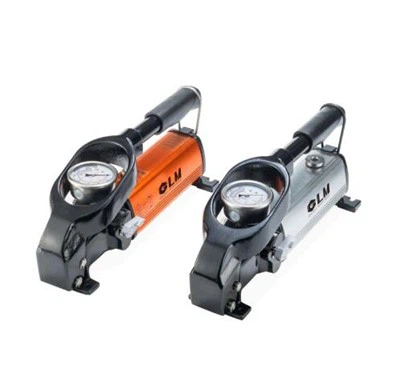
First, let’s make sure we’re on the same page about what an RC RR hydraulic cylinder even is, for anyone new to the hobby. Unlike full-sized construction or mining cylinders, these are compact, precision-made units designed to deliver controlled linear force to parts like your RC rock racer’s articulating axles, steering servos (wait, no — hydraulic steering is a step up from electric servos for heavy rigs), or even its locking diffs. A typical RC RR hydraulic cylinder runs on low-pressure hydraulic fluid (usually a lightweight, petroleum-based or synthetic fluid formulated for small-scale hydraulics, not automotive brake fluid — that’s a common newbie mistake), and it’s powered by a tiny onboard pump, usually driven by a small brushless motor. The pressure-flow characteristic of this cylinder is simply the relationship between two variables: the amount of pressure (force per unit area) the cylinder generates to move a load, and the rate of flow (volume of fluid moving through it per second) that makes that movement happen.
If that sounds vague, think of it this way: when you’re crawling over a smooth, flat rock, your cylinder needs a steady, gentle flow of fluid to extend or retract slowly, so you don’t tip over. That combination of low pressure and consistent flow keeps your rig stable, letting you pick your line carefully. But when you hit a 45-degree slab that requires your front axle to lift 2 inches to keep the tire from spinning, suddenly you need more pressure (to pull that heavy axle against gravity and friction) and a slightly faster flow to get the movement done before you slide backward. The pressure-flow curve of your cylinder tells you exactly how well it can adjust to both of those scenarios — and that’s where most off-the-shelf cylinders fall short for RC RR use.
Now, let’s get into the real science, but keep it rooted in what matters for your RC rig. Every hydraulic cylinder has a theoretical maximum flow rate, right? That’s the fastest it can move its piston if there’s no load at all — just air inside, no resistance to push against. But as soon as you add a load (say, the weight of your RC rock racer’s front end, plus the extra force needed to lift it over a rock), the pressure spikes, and the flow drops. That’s the non-linear part of the pressure-flow characteristic, and it’s not a flaw — it’s physics, called the pressure-flow relationship in fluid dynamics. For full-sized hydraulic cylinders, this curve is well-documented, but RC RR cylinders operate on a far smaller scale, so the variables change, and that’s where a lot of cheap, generic cylinders fail.
Let’s use a real example from a customer of mine: last month, a guy named Jake from a midwest RC rock crawling team bought three of our standard RC RR hydraulic cylinders for his new 1/10 scale rig. A week later, he emailed me panicking, saying that when he tested the cylinders on his backyard boulders, his front-left cylinder would extend fine on flat ground, but when he loaded it up by lifting the axle over a rock, it would freeze mid-move, and sometimes leak around the piston seal. When we dug into it, he was using a generic budget cylinder from a big box RC store — the kind that’s made for general-purpose RC use, not the extreme load of rock crawling. That budget cylinder had a pressure-flow curve that rose sharply, like a steep mountain: to move even a slightly heavier load, it required almost double the pressure, and flow dropped off drastically. Our cylinders, on the other hand, are engineered specifically for RC RR use, so their pressure-flow curve is flatter, more like a rolling hill: pressure increases gradually as load goes up, and flow stays consistent even under high pressure.
Why is that? Let’s break down the key components of an RC RR hydraulic cylinder that shape its pressure-flow characteristic, because if you’re buying these for your team or your personal rig, that’s what you need to look for. First, the piston’s bore size. The bore is the inside diameter of the cylinder, and it directly impacts how much force you can generate for a given amount of pressure. A larger bore means more surface area, so more force for the same pressure. But if the bore is too large, you waste flow on unnecessary movement — and if it’s too small, you need way more pressure to move a heavy load. For RC RR cylinders, we use a bore size that’s calibrated for the typical weight of 1/10 to 1/8 scale rock racers (the most popular sizes) — not one-size-fits-all, like generic cylinders. That calibration means the pressure and flow work in sync, so you don’t get that spike Jake experienced.
Second, there’s the piston’s orifice — the small hole (or set of holes) in the piston that fluid flows through as it moves. This is the most critical part of the pressure-flow characteristic, because the size and number of these orifices determine how much flow is restricted as pressure rises. In engineering terms, this is called orifice flow, and for small-scale hydraulic cylinders, even a 0.1mm difference in orifice size changes the entire curve. Generic cylinders often have fixed, one-size orifices that work for light loads but not the heavy, dynamic loads of rock crawling. Our RC RR cylinders have adjustable orifices? No, wait — too much adjustment leads to inconsistency. Instead, we machine custom orifice patterns that balance flow at low pressure (for slow, stable crawling) and pressure at high load (for lifting heavy components over obstacles). That’s the difference between a cylinder that works for casual bashing and one that works for competitive rock racing.
Third, there’s the seal design. I know seals sound boring, but they’re huge for pressure-flow performance. Cheap cylinders use rubber O-rings that create a lot of friction when pressure spikes, which forces the pump to work harder, dropping flow and causing pressure irregularities. Our cylinders use PTFE composite seals that are engineered for low friction under both low and high pressure, so the flow stays smooth even when the cylinder is under load. When friction is high, the pressure-flow curve becomes erratic — pressure jumps, flow stutters — which is exactly what makes your cylinder stall mid-crawl.
Now, let’s talk about how this pressure-flow characteristic translates to real-world RC RR performance, because that’s what you care about, not just numbers. Let’s take a scenario I run into weekly at RC events: a rig approaching a steep, uneven rock. The first step is to extend the front cylinder to lift the axle, which means moving fluid from the pump into the cap end of the cylinder (the end opposite the rod). On a generic cylinder, when that axle hits resistance, the pressure spikes so fast that the flow drops to almost zero, and the cylinder freezes. That’s the “stall” everyone hates — you spin your tires, slide backward, and lose your line. On an RC RR cylinder with a good pressure-flow characteristic, the pressure rises gradually, the flow stays steady, and the cylinder moves slow and controlled, letting you adjust your throttle mid-move to keep traction. No stalling, no wasted effort, no broken parts from sudden pressure spikes.
Another common issue is fluid leakage, which ties directly to pressure-flow performance. When a cylinder’s pressure-flow curve has a sharp spike, the internal pressure gets much higher than the cylinder’s design limit, which blows out seals or causes the piston to wear unevenly, leading to leaks. Our cylinders are tested repeatedly under the extreme load of rock crawling, so their pressure-flow curves are engineered to stay within safe, consistent limits even when the rig is under maximum stress. That’s why so many competitive RC rock racers come to us to replace their leaky generic cylinders — they’ve spent hundreds on tires and chassis, but they overlooked the one component that keeps all that performance working.
I get it, as a hobbyist, you don’t want to spend a fortune on parts, but here’s the thing: the pressure-flow characteristic of your RC RR hydraulic cylinder isn’t a niche engineering concept — it’s the difference between finishing the run and getting stuck on the first rock, between winning a local event and going home disappointed. I’ve seen guys save $20 on a generic cylinder, only to spend $150 on repairs and lost event entry fees because their cylinder couldn’t handle the load. Our cylinders are priced competitively, and we offer a full warranty because we stand behind their performance.
Let’s address a common misconception I hear all the time: “More pressure is better, right?” No, not for RC RR use. Too much pressure leads to all sorts of problems: seal damage, hose bursts, even cracking the cylinder body. The goal is a balanced pressure-flow characteristic, where pressure is exactly what you need to move the load, and flow is exactly what you need to move it smoothly. That’s the sweet spot we engineer into every RC RR hydraulic cylinder we supply.
If you’re still not sure what pressure-flow characteristic means for your rig, think of it like driving a manual car. If you never learned to balance throttle and clutch, you either stall out or burn through the clutch. The pressure-flow characteristic is that balance for your hydraulic cylinder — it’s how well the cylinder can match the force it generates to the speed it moves, based on the load it’s facing. Generic cylinders have a lopsided balance, so they work only in ideal conditions. Our RC RR cylinders have a balance built specifically for the harsh, unpredictable environment of rock crawling.
Now, I want to make this personal, because this isn’t just a blog for me — this is my business, built on working with RC rock racers like you. I started selling RC hydraulic cylinders 8 years ago, when I was an amateur rock racer myself, frustrated with the same stall and leak issues everyone complains about. I worked with a small machine shop to develop the first RC RR hydraulic cylinder with a purpose-built pressure-flow characteristic, and today we supply teams across the country, from local club racers to national competition teams. We don’t make 100 different cylinders for every RC make and model — we focus exclusively on RC RR hydraulic cylinders, so we perfect every detail, from bore size to orifice design to seal material, to get that pressure-flow curve just right.
If you’re tired of your cylinder stalling mid-crawl, leaking after a few runs, or not having the force to get your rig over the next obstacle, it’s time to upgrade to an RC RR hydraulic cylinder engineered for real rock racing. We offer free technical support to help you pick the right size and model for your 1/10, 1/8, or 1/12 scale rig, and we can even help you tune your hydraulic system to get the best possible performance.
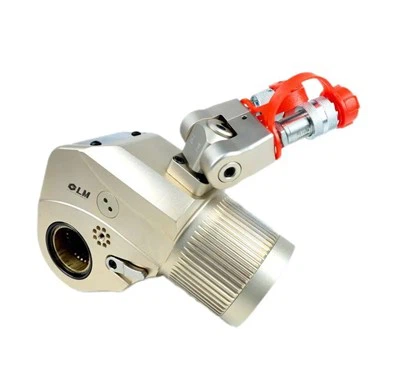
Whether you’re a casual hobbyist looking to improve your weekend bashing or a competitive team gearing up for the next national event, our RC RR hydraulic cylinders are built to perform when you need it most. Don’t let a bad pressure-flow characteristic hold your rig back — reach out to us to discuss your needs, and let’s get your rig crawling like it was meant to.
High Tonnage Hydraulic Cylinder References:
McCloy, D., Martin, H.R. Control of Fluid Power: Analysis and Design. Ellis Horwood Limited, 1980.
Ye, X., et al. “Pressure-Flow Characteristics of Small-Scale Hydraulic Cylinders for Mobile Robotics.” Journal of Fluids Engineering, vol. 138, no. 10, 2016, pp. 101104.
RC Hydraulic System Design for Remote Control Off-Road Vehicles. Society of Automotive Engineers (SAE) International, 2021.
Taizhou Galaxy Machinery Co., Ltd.
Taizhou Galaxy Machinery Co., Ltd. is one of the leading rc rr hydraulic cylinder manufacturers and suppliers in China. We warmly welcome you to wholesale cheap rc rr hydraulic cylinder for sale here from our factory. Good service and reasonable price are available.
Address: 18 Jiulong Road, Jiulong Town, Hailing District, Taizhou City, Jiangsu Province,China
E-mail: sales03@galaxy-machinery.com
WebSite: https://www.galaxy-machinery.com/
