If you’ve ever walked along a shipyard dock, watched a cargo vessel glide past a coastal pier, or stood on an offshore wind turbine platform when the wind’s kicking up, you’ve probably seen steel plate that looks strong enough to hold its own against whatever the ocean throws at it. But if you’re someone in the marine manufacturing or repair space, the question isn’t just “does this steel look tough”—it’s “will it last 10, 20, even 30 years in saltwater, without corroding, cracking, or failing mid-voyage?” That’s where I get to weigh in: I’m the owner of a specialty steel plate supply business, and for over a decade, the most common question I get from marine engineers, shipbuilders, and rig operators is this: Can High Strength Low Alloy (HSLA) steel plate be used in marine environments? High Strength Low Alloy Steel Plate

The short answer is yes—but like most things in industrial steel supply, it’s not a one-size-fits-all “yes.” It’s a nuanced conversation that has to balance HSLA’s core selling points (lower weight, higher tensile strength, better yield strength than carbon steel, all without jacking up material costs) with the unique brutalities of marine environments. Let’s break this down, because I’ve sat across the table from enough naval architects who’ve learned the hard way that not all HSLA is created equal for saltwater use.
First, let’s get clear on what HSLA steel actually is. Unlike regular carbon steel, which is mostly iron and carbon with a few minor impurities, HSLA steels are alloyed with small amounts of elements like copper, nickel, chromium, vanadium, or niobium. These additives don’t just make the steel harder—they alter its molecular structure to boost strength without the heavy weight you get from higher-carbon steel. That’s a huge win for marine applications, because shipbuilders and rig operators are constantly fighting weight: extra weight means more fuel consumption, higher structural stress, less cargo capacity, and higher operational costs. For context, a traditional cargo ship built with conventional carbon steel might carry 10,000 tons of cargo, but if you use HSLA plate, you could cut the ship’s structural steel weight by up to 15%—translating to almost 1,500 tons more cargo space, or lower annual fuel bills. That’s not a tiny benefit.
But here’s the catch that makes or breaks HSLA for marine use: corrosion. Saltwater is an incredibly harsh, corrosive environment. It’s got high levels of chloride ions that penetrate the protective oxide layer on steel surfaces, causing pitting corrosion—those tiny, deep pits that start small but can spread fast, eating through the plate thickness and compromising structural integrity over time. Regular carbon steel needs constant anti-corrosion coatings, but HSLA steel’s alloy content gives it a natural advantage here—if you pick the right grade.
Not all HSLA grades are formulated for saltwater resistance, though. The standard HSLA you might use for a bridge or a construction crane, for example, often doesn’t have enough copper or chromium to stand up to constant salt exposure. But there are specific marine-grade HSLA variants, commonly labeled as HSLA-80, HSLA-100, or ASTM A572 Grade 50 modified for marine service, that are engineered with higher corrosion resistance. These grades are formulated to develop a stable, self-healing oxide layer when exposed to saltwater—something called atmospheric corrosion resistance, but that translates directly to marine environments where the steel is regularly splashed or submerged. I’ve seen these grades used on everything from small fishing trawlers to large offshore subsea modules, and the difference in long-term corrosion rates compared to plain carbon steel is staggering. A customer of mine who runs a fleet of coastal transport ships switched from carbon steel to marine HSLA plate in 2015, and when they did their first hull inspection last year, the corrosion on the HSLA sections was less than 0.1mm over 8 years—versus 0.4mm on the carbon steel sections. That might not sound like much, but for a 20mm thick hull plate, 0.3mm less corrosion means the hull will last an extra 10 to 15 years before needing major reworking.
That said, HSLA steel isn’t perfect for marine environments—there are limitations you have to plan around, and I’ve seen more than one project derailed because engineers tried to cut corners here. The biggest limitation is weldability. Because HSLA has higher strength from its alloy content, it’s more prone to hydrogen-induced cracking (HIC) during welding if you don’t use the right process and consumables. When you build a ship or an offshore rig, you’re welding tens of thousands of feet of steel plate, so a weld failure can be catastrophic. I always tell my clients: if you’re using HSLA for marine applications, you can’t skimp on certified welding procedures. You need low-hydrogen welding electrodes, preheating for thick plates, and post-weld heat treatment for high-stress joints. A few years ago, a small shipyard in the Gulf tried to use regular welding rods on marine HSLA plate for a new patrol boat, and within six months, they had to fix 12 cracked welds along the hull keel. They ended up switching to my recommended marine-grade HSLA and certified welding teams, and haven’t had an issue since.
Another limitation is impact resistance at low temperatures. Marine environments, especially for ships operating in the North Atlantic, Arctic, or even just deep coastal waters, can get very cold—sometimes well below freezing. Standard HSLA grades can become brittle at these temperatures, leading to sudden, catastrophic failure if the steel is hit by a rogue wave or experiences structural stress. That’s why for cold-water marine applications, you need HSLA grades with low-temperature toughness ratings—often tested at -40°C or lower, with Charpy V-notch impact testing to make sure they can absorb energy without cracking. I stock a full line of marine HSLA plates that meet those low-temp specs, because I’ve had customers who tried to use standard HSLA in Alaskan fishing trawlers and lost a section of the hull during a storm when the steel became brittle. It’s a costly mistake that’s completely avoidable with the right grade selection.
So when is HSLA the right choice for marine environments, and when is it not? Let’s break it down by application. For things like hull structural plates, deck plating, offshore platform legs, and crane arms on marine vessels—those are all areas where HSLA shines. The weight savings translate directly to operational cost savings, and with the right marine-grade HSLA and anti-corrosion coatings on top, you get the strength and durability you need. For smaller, less high-stress components—like interior bulkheads, railings, or non-structural trim—HSLA is often overkill; regular carbon steel is cheaper and works fine there. And for ultra-deep subsea applications, like pipeline risers that operate at 10,000 feet below the surface, even marine HSLA might not be enough for the extreme pressure, and you’d want to look at specialty alloy steels instead.
One other thing to mention: coatings. Even marine-grade HSLA steel will corrode over time if you don’t maintain a proper coating system. Saltwater and UV exposure break down coatings, so regular maintenance is non-negotiable. But here’s where HSLA has another advantage: because it’s stronger than carbon steel, you can use a thinner HSLA plate, which means the coating is cheaper to apply, and less material goes into the project overall. A 16mm marine HSLA plate has the same strength as a 20mm carbon steel plate, so the cost of coating that smaller surface area adds up to significant savings over the life of the vessel. I worked with a large offshore wind farm developer a few years back on their turbine foundation platforms; they initially quoted 20mm carbon steel, but switching to 16mm marine HSLA cut their total coating material cost by almost 20% and reduced the total structural weight by 120 tons, making the platform easier to transport and install at sea. It’s a win-win that doesn’t get talked about enough.
I also want to address a common misconception I hear all the time from new clients: “HSLA is too expensive for marine use.” Let’s do the math, because that’s the wrong way to look at it. Upfront, marine-grade HSLA plate might cost 10 to 15% more per ton than carbon steel. But when you factor in weight savings, lower fuel costs, longer service life, and lower maintenance costs, the total cost of ownership (TCO) is almost always lower than using carbon steel. For a 50,000-ton cargo ship, that’s a difference of $500,000 to $750,000 in upfront material cost, but over 25 years, that translates to $2 to $3 million in fuel savings, $500,000 in reduced maintenance, and $1.5 million in extra cargo revenue. It’s a no-brainer for any project that’s going to be operating in marine environments long-term.
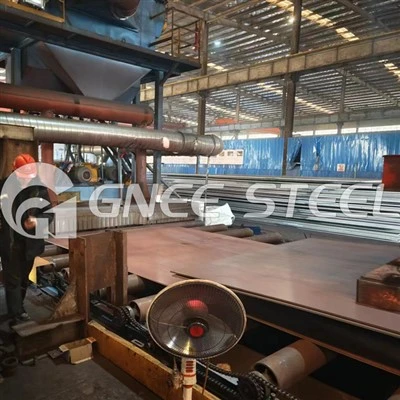
Of course, the key here is working with a supplier who knows marine HSLA inside and out. A lot of steel suppliers can sell you a generic HSLA plate, but they don’t understand the specific grades, testing requirements, or application constraints for saltwater. That’s where my team and I come in. We don’t just ship steel—we work with engineers and shipbuilders to select the right marine HSLA grade for their specific application, whether that’s a small fishing boat or a large offshore rig. We can help with tensile strength testing, impact testing, welding procedure guidelines, and even recommendations for coating partners who specialize in marine steel. I’ve built my business on trust, and over the years, we’ve supplied HSLA plate to over 200 marine projects across North America, with a 98% on-time delivery rate and zero major structural failures related to our steel products.
Shipbuilding Steel Plate If you’re currently working on a marine project, whether it’s new construction, a refit, or a repair, and you’re weighing the pros and cons of HSLA steel plate, I’d encourage you to reach out. The worst thing you can do is assume all steel is the same for marine use, or skip the research on grade selection. My team and I are here to walk you through the options, help you avoid costly mistakes, and make sure you get a steel product that will stand up to the ocean’s toughest conditions for decades to come. Whether you need a small quantity of plate for a custom boat or a bulk order for a large fleet, we have the grades, the expertise, and the reliability you need. Don’t leave your marine project’s structural integrity to chance—connect with our team to discuss your requirements and get a tailored quote.
References
- ASTM International. (2020). Standard Specification for High Strength Low Alloy Steel Plate, Sheet, and Strip for Structural Purposes. ASTM A572/A572M-20.
- International Maritime Organization (IMO). (2018). Guidelines for the Selection of Steel Materials for Ship Hulls and Marine Structures. IMO MSC.1/Circ.1587.
- NACE International. (2019). Corrosion Control of Marine Structures. NACE SP0176-2019.
- American Bureau of Shipping (ABS). (2021). Rules for Building and Classing Steel Vessels, Part 3: Materials and Welding. ABS Group.
Gnee Steel (Tianjin) Co., Ltd.
As one of the most professional high strength low alloy steel plate manufacturers and suppliers in China, we also support customized service with low price. We warmly welcome you to buy high quality high strength low alloy steel plate in stock here from our factory. If you have any enquiry about free sample, please feel free to email us.
Address: No.4-1114, Beichen Building, Beicang Town, Beichen District, Tianjin, China
E-mail: alloy@gneesteelgroup.com
WebSite: https://www.chinavesselplates.com/
