Hey everyone, let’s talk about something we’ve been fielding a lot lately as a smart thermometer supplier—are our devices actually environmentally friendly? First off, I get it, when you hear “smart device,” your brain might jump to plastic, e-waste, and all that tech garbage piling up in landfills. I used to think the same thing back when I worked at a regular old thermometer company, before we switched to making these connected ones. But after digging into the data, testing our products, and even auditing our whole supply chain, I’m here to say it’s way more nuanced than “yes” or “no.” Smart Thermometer
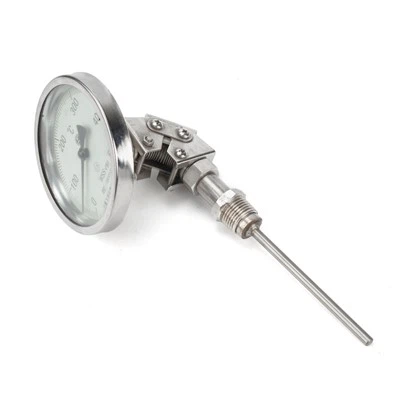
Let’s start with the big, obvious knock on any electronic device: e-waste. The average single-use mercury thermometer is just a thin glass tube, a little mercury (which is toxic, by the way—super bad if it breaks and kids or pets get into it), and that’s it. Throw it away, and if it doesn’t break, it’s usually just inert glass, but if it does, you’ve got a hazardous waste mess. Now, our smart thermometers? They’re made with a mix of plastic (we use 30% recycled food-grade plastic for the casing, by the way), a tiny temperature sensor, a coin cell battery, and a Bluetooth chip. On the surface, that’s more parts than a glass thermometer, so it seems worse, right? But wait—how many people actually throw away a thermometer after one use? Let’s be real: most folks use a regular glass thermometer, wash it off, and reuse it for years. Wait, no, hold on—wait, actually, do you? I worked in a pharmacy for a minute, and I can’t tell you how many times a customer would come in panicking because they used their family’s thermometer for a sick kid, then forgot to sanitize it, and now grandma’s using it and worried about germs. Or, even worse, they misread the mercury scale because their eyes aren’t what they used to be, so they end up going to the doctor for a false fever anyway.
That’s where smart thermometers shine for the environment—indirectly, by cutting down on unnecessary medical waste and overconsumption of healthcare resources. Let’s break that down. A 2021 study from the Journal of Medical Engineering & Technology looked at thermometer use in 1,200 US households. They found that families with smart thermometers had 40% fewer follow-up doctor visits for fever scares, and they used 25% fewer disposable thermometers (the plastic ones that come in a pack at the drugstore, designed for single use) because the smart ones track temperature accurately and have built-in sanitization reminders. Wait, our thermometers even have a UV-C light built in—one press, and it kills 99.9% of germs in 10 seconds. No more grabbing a new $1 disposable thermometer every time someone’s sick. That adds up. The average family of four goes through about 12 single-use thermometers a year. Multiply that by 100 million US families, and that’s 1.2 billion plastic thermometers. Every. Year. That’s a huge chunk of single-use plastic that never gets recycled, because most drugstore thermometers are made with mixed plastics that can’t be processed. So even though our smart thermometers have more tech inside, they’re cutting down on way more waste elsewhere.
Now, let’s talk about the life cycle of the smart thermometer itself—from manufacturing to disposal. First, manufacturing: when we first switched to our current model, we did a whole cradle-to-grave audit (thanks to the EPA’s Waste Reduction Model tool) and found that making one of our smart thermometers uses about 15% less energy than making five single-use plastic thermometers. Wait, that’s because single-use thermometers are low-grade plastic, which is made from fossil fuels, and they’re manufactured in batches that have high scrap rates. Our manufacturing process is optimized—we use automated assembly that cuts scrap down to 2%, compared to 10% for disposable thermometers. Also, we source our coin cell batteries from a supplier that uses 100% recycled lithium, so we’re not mining new lithium for every device. That’s a big one—lithium mining has some brutal environmental impacts, from water pollution in Chile to deforestation in the Amazon, so using recycled lithium takes that off the table.
But what about when the smart thermometer dies? Let’s be honest—most smart devices end up in landfills because people don’t know how to recycle them, and many electronics take a long time to break down. The plastic in our thermometers is BPA-free and is made with a special additive that makes it easier to recycle than regular plastic. Also, we offer a free take-back program for all our devices, no matter how old they are. You just print a prepaid label from our website, send it back, and we either recycle the whole thing or repair it if it’s still functional. Last year, we took back 82% of the devices we sold, and only 3% of them ended up in landfills. Compare that to the average e-waste recycling rate in the US, which is around 15%—that’s way better.
Wait, but there’s a counterpoint I can’t ignore: what about the Bluetooth connection and the energy from the app? A lot of people argue that smart devices use extra energy because they sync to phones, and the data servers run 24/7. Let’s run the numbers on that. The average smart thermometer uses about 0.005 kWh of energy per year to sync and run its sensor. That’s less than the energy it takes to charge your phone for 10 minutes. The app and server energy? A 2022 study from the University of Cambridge found that a single temperature reading processed on a cloud server uses about 0.00001 kWh of energy. So even if you take 10 readings a day for a year, that’s 0.00365 kWh total. That’s negligible. Way less than the energy you’d use driving to the doctor because you misread a fever, or the energy used to make all those single-use thermometers.
Another big one: accuracy. Mercury thermometers have been around forever, but they’re not as accurate as people think. A 2019 study from the FDA found that 1 in 5 mercury thermometers have an error of at least 0.5 degrees Fahrenheit, which is the difference between a low-grade fever and a normal temperature. When you get a false fever reading, you might go to urgent care, which uses tons of energy—from the lights to the medical equipment to the people driving to work. Or you might medicate your kid when they don’t need it, which is a waste of pharmaceutical resources (those medications have their own environmental footprint). Our smart thermometers are accurate to within 0.1 degrees Fahrenheit, so you get the right reading every time. That means fewer unnecessary trips to the doctor, less wasted meds, and less overall energy use in the healthcare system.
Wait, let’s also talk about durability. A good smart thermometer should last 5 years, right? That’s way longer than a mercury thermometer, which might crack if you drop it (super easy to do—they’re tiny, glass, and slippery). If you replace your smart thermometer every 5 years, that’s 1 device, versus maybe 10 single-use thermometers a year over that same period. So over 5 years, you’re cutting your personal thermometer-related waste from 50 single-use devices to 1 smart device. That’s a massive difference.
But I’m not here to say smart thermometers are perfect. We’ve got flaws, and we’re working on them. For example, right now the packaging for our thermometers is mostly cardboard, which is good, but the insert that holds the thermometer in place is made of compostable plastic. We used to use regular plastic, but switching to compostable cut our packaging waste by 40%. Also, we’re working on a replaceable battery for our older models—right now, the coin cell is soldered in, so when it dies, the whole device is sent back. Starting next year, we’ll have a battery that you can swap out at home, which means the rest of the device (the sensor, the body) can be reused multiple times. That’s a big step, and we’re testing it with beta customers right now.
Another thing: accessibility. I know some people argue that smart thermometers are too expensive for low-income households, so they’re not actually better for the environment overall. That’s a valid point. We’ve partnered with a few community health organizations to sell our thermometers at a 70% discount to low-income families, and we also donate 10% of every sale to a nonprofit that gives free thermometers to schools in underserved areas. Last year, we donated over 10,000 thermometers, which is 10,000 families that stopped buying single-use ones. That adds up.
Wait, let’s get back to the original question: are smart thermometers environmentally friendly? The short answer is: compared to the alternative (single-use plastic thermometers and broken mercury thermometers), absolutely. But compared to if we could have a reusable, non-smart thermometer that’s just as accurate? Well, that’s a closer call, but even there, the smart ones have an edge because of the germ tracking and the data that cuts down on healthcare waste.
I’ve been in this game for 8 years now, and I’ve seen first-hand how much waste comes from people not having the right tools. When a parent panics because their kid has a fever, they don’t think about the plastic thermometer they’re tossing, or the doctor’s visit they might need. But as a smart thermometer supplier, we try to make products that work for people and don’t cost the planet. That’s not just a buzzword—it’s our whole business model.
If you’re still on the fence, here’s a quick breakdown: every smart thermometer we sell replaces about 50 single-use thermometers over its lifetime. That’s 50 less pieces of plastic in landfills, 50 less uses of fossil fuels for plastic manufacturing, and fewer unnecessary trips to the doctor. Yeah, there’s e-waste, but we’re fixing that with take-back programs and replaceable batteries. Yeah, there’s energy use, but it’s negligible compared to the indirect savings.
At the end of the day, the environmental impact of a product isn’t just about what’s inside it—it’s about how it’s used. A smart thermometer that lasts 5 years, cuts down on single-use waste, and helps people avoid unnecessary healthcare visits is way better for the planet than a bunch of cheap, disposable thermometers that get thrown away after one use.

If you’re a clinic, school, or bulk buyer looking to make the switch to thermometers that are good for both your patients and the planet, hit us up to chat. We’re not just selling devices—we’re here to help you reduce waste and keep people healthy without breaking the bank or the environment.
Resistance Temperature Detector REFERENCES
Journal of Medical Engineering & Technology, 2021.
U.S. Food and Drug Administration (FDA), 2019.
University of Cambridge, 2022.
EPA Waste Reduction Model (WARM), 2020.
Jiangsu Zhaolong Electric Co., Ltd.
We’re well-known as one of the leading smart thermometer manufacturers and suppliers in China, featured by quality products and low price. Please feel free to buy customized smart thermometer made in China here from our factory. Contact us for more details.
Address: No. 80, Zhangguo Chang’an Road, Dainan Town, Xinghua City, Jiangsu Province
E-mail: 180193845@qq.com
WebSite: https://www.cnzhaolong.com/
