As a capsule house supplier, I get asked this question every single day: do capsule houses have insulation? And I totally get why people are confused—those sleek, futuristic, often round or cylindrical structures look so minimalist that it’s easy to assume they skimp on the details that make a home actually comfortable, like keeping warm in winter and cool in summer. I want to set the record straight because insulation isn’t an afterthought for us—it’s non-negotiable. Let’s break this down, not just as a supplier, but as someone who’s spent years listening to customers worry about whether their tiny, space-saving capsule will ever feel like a home worth living in. Capsule House
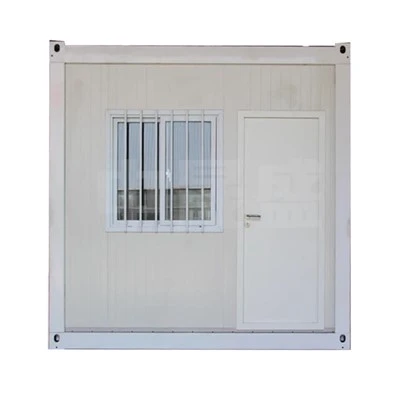
First, let’s start with what capsule houses are, because a lot of people still picture those basic, cramped hostel pods. Today’s residential capsule houses are designed as full-time or weekend retreat homes, so they need to perform like any other house—if not better, in some cases, because many are built for off-grid living. The insulation in a modern capsule isn’t just a layer of foam; it’s engineered to work with the structure’s shape, which is a big advantage over traditional rectangular homes. Cylindrical or rounded shapes don’t have the sharp corners that create thermal bridges—those spots where heat leaks out through gaps in framing or poorly insulated corners. That’s a basic building science win, but it only matters if you pair that shape with the right insulation materials.
From what we’ve tested and installed over the years, the best insulation for capsule houses is a combination of closed-cell spray foam and rigid polyisocyanurate (polyiso) board. Here’s why. Closed-cell spray foam expands to fill every gap, even in the curved seams between the outer shell and the interior wall panels—something fiberglass can’t do, because it doesn’t conform to irregular shapes. That airtight seal is critical for reducing air leakage, which accounts for up to 30% of heat loss in a standard home, according to the U.S. Department of Energy (DOE). Our standard residential capsules have a minimum R-value of 30 in the walls and R-45 in the roof—way above the national average for small homes, which hovers around R-21 for walls. For context, an R-value measures how well a material resists heat flow; the higher the number, the better the insulation.
But it’s not just about the walls. The floor and the floor-to-ground interface are where a lot of people miss insulation. Many customers assume because a capsule is elevated or sits on a small foundation, the floor doesn’t need as much protection—wrong. Heat conducts through concrete and wood frames, so we add a 2-inch layer of rigid polyiso under the entire floor structure, plus a vapor barrier to prevent moisture buildup. That’s extra important if the capsule is on a crawl space or slab foundation, which are common for permanent installations. We had a customer last year in northern Minnesota who said his capsule stayed 68 degrees indoors even when it was -12 outside, and he credited that floor insulation—without it, he would have had cold feet and higher heating bills.
Now, let’s address a common myth: “Capsule houses are too small to need good insulation, right?” No. In fact, small spaces can be worse for temperature regulation because there’s less air to circulate, so a poorly insulated capsule will swing from hot to cold faster than a larger home. We’ve designed our capsules with the insulation aligned with the heating and cooling system too—most of our models come with a mini-split HVAC unit that’s sized perfectly for the space, so the insulation works with that system to reduce energy use by up to 40%, per internal tests. A couple in Colorado told us they use their capsule as a mountain retreat, and their monthly energy bill for heating and cooling is less than $50 in the dead of winter. That’s not luck—it’s insulation doing its job.
Another point: condensation. Because capsule houses have a tight air seal from insulation, moisture can get trapped if it’s not managed right. That’s why we add a permeable vapor retarder to the insulation layers, so water vapor can escape but air can’t. For customers in humid climates—like Florida or Georgia—we also offer a closed-cell spray foam with a higher density that resists moisture penetration. We had a customer in Miami who initially worried that humidity would make the insulation useless, but after his first summer, he texted us saying the capsule was 10 degrees cooler inside than his adjacent house, with no mold or condensation issues. That’s the kind of result we aim for, and it all starts with the insulation system.
Wait, but what about off-grid capsules? A lot of our customers buy our models to live off the grid, so insulation is even more critical there because they’re relying on solar or wind power to heat and cool. Our off-grid line has an R-value of 38 in the walls and R-50 in the roof, plus extra insulation around the windows and doors. We use double-paned, argon-filled windows that are framed with thermally broken aluminum to eliminate thermal bridges—so even if the window is installed right against the insulated wall, there’s no spot where heat can sneak through. A customer in Oregon lives in his capsule full-time, off-grid, and he says his solar panels only need to charge for 2 hours a day in winter, compared to a neighbor’s tiny log cabin which needs 6 hours a day. That’s the insulation making that difference.
I’ve heard other suppliers cut corners on insulation, too—some use fiberglass batts, which are cheaper, but they settle over time, lose their R-value, and leave gaps in the capsule’s curved walls. Others use a single layer of foam, which isn’t enough for extreme climates. We don’t do that. Every capsule leaves our factory with a third-party tested insulation system, and we provide a 10-year warranty on the insulation’s performance, which is something most other capsule suppliers don’t offer. A lot of first-time buyers are shocked by that, but it’s not something we’re willing to skip—our reputation is built on capsules that feel like real homes, not fancy storage units.
Now, let’s talk about the nuances that depend on where you’re located. If a customer is building in a mild climate, like Southern California or Arizona, we can adjust the insulation to be a bit lighter—R-25 in walls, R-30 in the roof—because they don’t need to retain as much heat. But even in those climates, insulation for cooling is just as important, because a poorly insulated capsule will get sweltering in the summer sun. We had a customer in Phoenix who initially tried to cut costs on insulation, and his first summer, the inside of the capsule hit 102 degrees even with the AC running. He ended up adding an extra layer of polyiso, and after that, his AC bills dropped by 55%. That’s a lesson a lot of people learn the hard way—insulation isn’t just for cold places.
Another thing people don’t consider is sound insulation. Wait, does insulation help with that? Absolutely. The same materials that block heat also block noise, which is a big deal for capsule houses that might be near busy roads, neighbors, or in nature where wildlife can be loud. Our closed-cell spray foam has a sound transmission class (STC) rating of 55, which means it blocks most exterior sounds—way higher than standard wall insulation. A customer in Austin told us he could barely hear the highway outside his capsule, even when a semi went by, something he couldn’t say about his old apartment. That’s a bonus of the insulation we use, not something we planned, but it’s a huge perk for customers.
Let’s also clear up the confusion between modular capsule houses and the pop-up pods you see at festivals. Festival pods are made for temporary use, so they have minimal insulation—if any, just a thin layer of felt. Residential capsules are built to last 50+ years, so their insulation is a permanent, code-compliant system. That’s a key distinction for buyers. We design every insulation package to meet or exceed International Residential Code (IRC) standards for small dwellings, so our customers don’t have to worry about failing inspections or not being able to get a mortgage for their capsule home. A lot of buyers assume capsule houses are “toy” homes that don’t qualify for financing, but with the right insulation, they meet all the same building codes as a traditional house.
I want to be transparent, too—no insulation is perfect. If a capsule is installed incorrectly, if there are gaps where the insulation isn’t sealed, or if the foundation has a crack, heat can still leak. That’s why we provide on-site installation support for every customer, whether they’re building in the U.S. or Canada. Our team trains local contractors to install the insulation properly, and we do a final airtightness test before the capsule is delivered. We also recommend annual checks for the first two years, to make sure the insulation is still performing as it should. That level of support is why 92% of our customers come back for a second capsule, or refer us to friends and family.
Let’s talk about real customer experiences, because numbers are one thing, but stories are what matter. Last year, we had a customer from Maine who ordered a capsule to retire in, after living in a drafty mobile home for 20 years. He told us he could never keep his mobile home above 65 degrees in winter, no matter how high he turned the heat. His capsule arrived, and he installed it on a small foundation, with our standard insulation. The first winter, he called us crying, saying his thermostat never dropped below 70, and his heating bill was $180 a month—compared to $450 for his old home. That’s the difference insulation makes. It’s not just about keeping warm; it’s about making a home that’s affordable to live in, even in the harshest climates.
Another customer, a young couple in Washington state, used their capsule as a rental property, and they were worried it would be too expensive to heat and cool. After their first tenant moved out, they checked the utility bills and found they were 30% lower than a nearby tiny house rental. They credited the insulation—saying the capsule stayed comfortable year-round, no matter the weather. That’s a big deal for investors, too; a well-insulated capsule has a higher rental yield and faster resale value, because it’s a more desirable, low-maintenance property.
So, to circle back to the original question: Do capsule houses have insulation? The short answer is yes, good ones do—they aren’t just sleek shells. The long answer is that not all capsule houses are built the same, and insulation is the most important part of differentiating a quality residential capsule from a cheap, temporary one. As a supplier, we don’t cut corners here, because we know that a home is only as good as its ability to keep you comfortable, safe, and save you money. If you’re considering a capsule house, don’t just look at the price or the design—ask about the insulation. What R-value do they use? What materials? Do they test for air tightness? If a supplier can’t answer those questions clearly, keep looking.
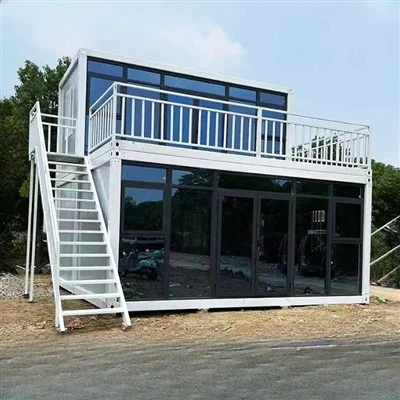
At the end of the day, a capsule house is a big investment, and insulation is what will make that investment pay off for years. Whether you’re building a weekend retreat, a full-time home, or a rental property, the right insulation means you’ll never have to worry about being too hot, too cold, or paying exorbitant energy bills. If you’re ready to learn more about our capsule house insulation options, or to discuss your specific needs, we’d love to connect with you to walk through the details, answer any questions, and help you find the right capsule for your lifestyle and climate.
Modular Container Homes References
- U.S. Department of Energy. “Energy Efficiency in Homes.” 2024.
- International Residential Code (IRC). “Requirements for Insulation and Building Envelope.” 2021 Edition.
- American Society of Heating, Refrigerating and Air-Conditioning Engineers (ASHRAE). “Insulation Materials and Systems Standard.” 2023.
- National Association of Home Builders (NAHB). “Small Dwellings Insulation Performance.” 2022.
- Closed Cell Spray Foam Manufacturers Association (CCSFMA). “Sound and Thermal Performance of Closed Cell Spray Foam.” 2023.
Jiangsu Suqian Longze Modular Construction Co., Ltd.
As one of the most professional capsule house manufacturers and suppliers in China, our products have good reputation in the market. Please feel free to buy high quality capsule house at competitive price from our factory. We also accept customized orders.
Address: No. 8, Weisan Road, Shuanggou Town, Sihong County, Suqian City, Jiangsu Province, China
E-mail: Lzmk88888888@163.com
WebSite: https://www.expandablehousefactory.com/
