Hey everyone, it’s [Your Name] from the EV Charging Connector team here. If you’ve spent any time around electric vehicles, you know the charging setup can feel like a weird puzzle—especially when you’re scouring Facebook Marketplace or local auto parts shops for deals. Last week, I got a DMs from a guy who’s got a Nissan Leaf and was looking for a used J1772 adapter because the one that came with his car died. He asked, “Can I just grab any used charging adapter off the shelf, or am I gonna fry my battery?” Total fair question—most of us don’t know the ins and outs of adapters, so let’s break this down straight, no fancy jargon. EV Charging Connector

First off, let’s be clear: EV adapters aren’t just random cords that plug into two things. They’re tiny, overengineered lifelines that translate between different connector types—like J1772 (the standard for most US EVs) and CCS1, or Tesla’s NACS and pretty much everything else. So when you’re thinking about a used one, there’s way more to check than “does it fit.” Let’s start with the big stuff that could actually ruin your car or charger.
For starters, build quality and wear and tear. Used adapters get banged up. I’ve seen ones that’ve been dragged across parking lot asphalt, left out in the rain for months, or accidentally run over by a shopping cart. If the connector pins are bent, corroded, or have weird little dents, that’s a huge red flag. Those pins aren’t just metal sticks—they carry high-voltage current (like 240V for Level 2, or way more for fast charging). A bent pin might wiggle mid-charge, cause arcing (that’s a tiny spark, basically), or even melt the plastic housing. Corrosion is another killer—if the inside of the adapter has green gunk, that’s moisture eating away at the metal, which will mess with power transfer and could lead to a short circuit. I’ve seen a guy plug a corroded used adapter into his NACS charger, and it fried the charger’s internal circuit board—cost him $800 to fix. Ouch.
Next, compatibility. This is where a lot of people mess up. Just because a used adapter says “works for Tesla to J1772” doesn’t mean it works for every Tesla or every J1772 charger. Different adapter models have different amperage ratings—like 16A for Level 1, 32A for Level 2, or 50A for fast charging. If you grab a used 16A adapter and try to use it with a 50A CCS charger, you’re gonna get way more power than the adapter can handle. That’ll trip the charger’s breaker, or even overheat the adapter’s wires. Also, some adapters have communication protocols built-in—they talk to your car and the charger to make sure the charge is safe. Used ones that are old might be incompatible with newer EVs. For example, a 5-year-old Tesla adapter might not work with the new Model 3 Highland, because Tesla updated its communication software. I’d recommend checking the manufacturer’s specs (if you can find them on the adapter or online) to make sure it’s rated for your EV’s make, model, and charging speed—don’t just rely on a “universal” label.
Then there’s durability testing. New EV adapters go through all kinds of tests—IP rating for water resistance, temperature testing (hot as hell in a parking lot, freezing in the winter), and thousands of plug/unplug cycles. Used adapters might have already gone through way more cycles than they should. Most manufacturers say adapters are good for about 10,000 plug/unplug uses. If the one you’re looking at is from a 10-year-old EV that’s been charging every night, that’s 3,650 cycles minimum—close to half the lifespan. Add a few more from other owners, and you’re cutting it way too short. I’ve had customers bring in used adapters that felt flimsy—like the plastic was cracking when they plugged it in. Those are on their last legs, trust me.
Wait, but before you write off all used adapters entirely—there are some cases where it’s totally okay, as long as you do your homework. If you’re buying from a reputable seller, not some random person on Craigslist who can’t answer any questions, ask for close-up photos of the pins (no corrosion, no bends), ask when they stopped using it, and ask for any original packaging or specs. If they can say “this adapter is 32A, works for 2020 Model Y and all Level 2 J1772 chargers,” that’s a way better sign than “it’s just a random adapter for Teslas.” Also, avoid used adapters for fast charging if you can—fast charging puts way more stress on the adapter, and wear and tear happens way faster. Stick to Level 2 (home charging) for used ones, that’s less risky.
But here’s the thing: even if you check all the boxes, used adapters still have that “unknown” factor. You don’t know if it was stored in a garage, or left out in the sun all summer, or dropped in a puddle. Newer adapters might cost a bit more, but at least you know they meet all the latest safety standards. That’s why we make our adapters—we test every single one for corrosion resistance, amperage ratings, and compatibility with all the latest EVs. We even offer a 1-year warranty, so if something goes wrong, you’re covered.
Now, let’s talk about some mistakes people make when buying used adapters. I saw a post on Reddit last month where a guy bought a used CCS1 adapter for his Ford Mustang Mach-E, and it didn’t work with his home charger. Turned out the adapter was rated for public fast chargers, not Level 2 home chargers—two totally different power outputs. Another one: a lady bought a used Tesla adapter, plugged it into her J1772 charger, and the adapter started smoking. Yep, that’s because it was a 16A adapter, and her charger is 40A. Big problem. The key here is to not assume “universal” actually means universal. Double-check the specs with your EV and charger’s manual.
If you’re set on going the used route, here’s a quick checklist to follow: 1. Inspect the pins closely for bends, corrosion, or discoloration. 2. Confirm the amperage rating matches your EV’s max charging speed (don’t go higher, don’t go lower). 3. Check the model year—anything newer than 5 years is better, because older models might not work with new EV software. 4. Test it before you leave with it—plug it into a charger and make sure the connection is solid, no weird lights or error messages. 5. Avoid adapters that look beat up, even if the price is half off. You don’t wanna risk ruining a $50k+ EV over a $20 adapter.
At the end of the day, the short answer is: it depends. A used adapter can work, but only if you’re super careful about checking for wear, compatibility, and safety. If you’re not 100% sure, it’s way better to go with a new one—cheap adapters are worth saving a few bucks, but if it breaks, the cost to fix your car or charger is way higher.
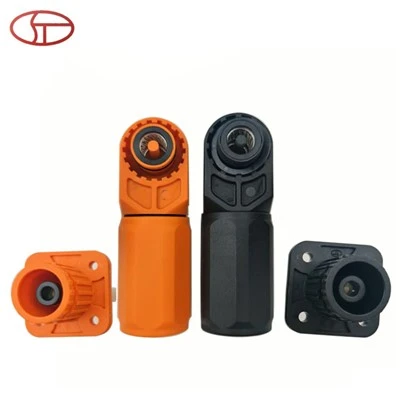
If you’re in the market for a reliable EV charging adapter, don’t mess around with used ones that have unknown histories. We make adapters that are tested to handle all your charging needs, no surprises. Hit us up to chat about what you need, and we’ll help you find the perfect fit for your EV.
Energy Storage Connector References:
- International Organization for Standardization (ISO) 15118: Road vehicles — Vehicle to grid communication interface
- Society of Automotive Engineers (SAE) J1772: Electric vehicle conductive charging system
- National Fire Protection Association (NFPA) 70: National Electrical Code, Article 625 for Electric Vehicle Charging Systems
- US Department of Energy (DOE) Office of Energy Efficiency & Renewable Energy: Electric Vehicle Charging Equipment Safety Guidelines
Zhejiang Shitu Electric Co., Ltd.
As one of the most professional ev charging connector manufacturers and suppliers in China, we offer a wide range of products with superior quality. Please feel free to buy custom made ev charging connector from our factory. Good service and reasonable price are available.
Address: 1st and 2nd floors of Building C, Yueshang Entrepreneurship Park, Yueqing Economic Development Zone
E-mail: stdq@cnshitu.cn
WebSite: https://www.shitu-connect.com/
