Hey there, if you’re here, chances are you’ve got a vibration conveyor on your production line that’s either moving too much product, too little, or just plain messy – and you’re sick of guessing when to tweak it. I’ve been selling and troubleshooting vibration conveyors for almost a decade now, and let me tell you: controlling flow rate isn’t rocket science, but it’s way more nuanced than just cranking up a dial. Let’s break this down like I’m chatting with a plant manager who’s stuck with a line that’s either overflowing a filler or leaving one spot empty. Vibration Conveyor
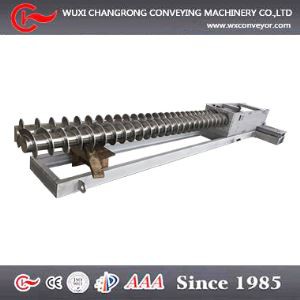
First, let’s get one thing straight: what even “controls” flow on a vibration conveyor? These things don’t rely on belts or screws – they vibrate (usually from unbalanced weights on a motor or electromagnetic pulses) to push product forward. So flow rate is basically how fast those vibrations move your stuff, plus how the product itself interacts with the conveyor surface. If you skip the basics, even the fanciest control setup won’t save you.
Let’s start with the most common, and often overlooked, culprit: the vibration parameters themselves. This is the “core control” stuff we adjust every single day, and it’s not just turning a knob. Two big variables here are amplitude and frequency. Frequency is how many times the conveyor shakes per second – think of it as how “fast” the shakes are. Amplitude is how big each shake is, like how far left and right the trough moves each time. Here’s the thing: if you bump frequency too high on small parts, they’ll just bounce out of the conveyor. Crank amplitude too low, and heavy items (like cast metal parts or a bucket of granola) won’t move at all. At my shop, we’ve had customers tell us “I turned the vibration up and it worked for a week then died” – that’s because they only adjusted frequency, not amplitude, and the motor got overloaded from constant high-speed, tiny shakes.
A quick pro tip I give every new client: use a simple formula we’ve tested for most bulk solids (we make our conveyors to work with everything from fine powder to 50lb metal pieces, so this is general enough). For flow rates under 50 cubic feet per hour, pair 1000 RPM frequency (standard on most of our small to mid-range conveyors) with amplitude between 0.5mm and 2mm. For heavy or large parts, drop frequency to 720 RPM (the slower, deeper shakes) and bump amplitude to 2mm to 5mm. We actually have a little cheat sheet we send to every customer when they buy a conveyor – you’d be shocked how many skip that and mess up their setup.
Next up: the control method you pick. This is where most people waste money on unnecessary parts, or skimp and end up with no precision. Let’s walk through the three main options we offer, and when each works. First, the basic voltage controller. This is the cheap, dial-style one we include with our entry-level conveyors. It works by adjusting the power to the vibration motor – higher voltage = stronger vibration. But here’s the catch: it’s not super precise. If your product is wet and sticky (like dough or fresh produce), it’ll take more voltage to move it than dry granola, and you might have to tweak it mid-shift. We recommend this only for simple, consistent products and lines that don’t need constant adjustments.
Then there’s the variable frequency drive (VFD) controller – this is the sweet spot for most of our regular clients. A lot of people mix up voltage controllers and VFDs, but VFDs let you adjust frequency directly, not just power. That means you can fine-tune without overworking the motor. For example, if you’re moving plastic pellets that are prone to static, a VFD lets you drop frequency just enough to slow flow, and you don’t have to crank power so high that the pellets bounce all over. The best part? Most VFDs can integrate with your existing line sensors – like the ones that tell when a filler is full or a packaging station is backed up. We’ve installed VFDs for a snack food client who was wasting 10% of their granola by overfilling bags, and they cut that to under 1% in a month. Worth every extra $200, in my book.
Third, if you’re doing high-volume, 24/7 production, or moving super delicate stuff (like microchips or glass parts), we go with electromagnetic vibration controllers. These use electromagnets instead of motors, so they have way more precise, smooth vibration – no clunky unbalanced weights that can throw things off. The flow rate can be adjusted in real time with a control panel that syncs to your entire line’s automation. We had a pharmaceutical client that used these for moving powdered meds; before, their flow was inconsistent and they had to do extra sifting, but now it’s so precise they hit exactly 500mg per dose every time. The only downside? They’re pricier upfront, but the uptime and precision pay for themselves in 6 months for most operations.
Now, let’s talk about the stuff that’s not related to the motor or controller – the conveyor setup itself. This is the part even old-time plant operators forget, but it can mess up flow even if your controls are perfect. First, the conveyor’s angle. If it’s slightly tilted downhill (1 to 3 degrees, max), gravity helps the vibration push product forward. But tilt it more than that, and stuff will slide too fast – even if your vibration is cranked low. We see this all the time: a client installs a conveyor, tilts it to unload into a hopper, and then wonders why their flow is double what they need. Another angle thing: the feed hopper above the conveyor. If the hopper is too small or positioned wrong, it’ll dump product all at once, overwhelming the conveyor. We custom-size hoppers for most clients, but if you already have a hopper, make sure the outlet is centered directly over the conveyor’s middle, not off to one side. That uneven load will make the vibration uneven, leading to lopsided flow.
Then there’s the conveyor surface itself. If you’re moving sticky powder, a smooth metal surface is a disaster – product will cling and clog. If you’re moving small parts, a textured surface might catch and jam them. We offer different liners: UHMW plastic for sticky stuff, rubber for grip on small items, even food-grade stainless steel for sanitary industries. Another trick: if you’re getting “dead spots” on the conveyor where product isn’t moving, it’s usually because the unbalanced weights on the motor are misaligned. We include a wrench with every conveyor for adjusting those weights, and we walk clients through it step by step. I’ve had a customer call me panicking because their conveyor was moving nothing, and it turned out the weights had shifted during shipping – a 2-minute adjustment fixed their entire line.
Wait, let’s not forget product properties – this is the X-factor that trips up even the best setups. Flow rate isn’t just about the conveyor; it’s about what you’re moving. Fine, dry powder will flow differently than wet, chunky salsa, which is different than tiny metal screws. For example, powder can have “fluidization” – when vibration makes it act like a liquid, so it flows way faster than expected. A client once tried using a standard conveyor for flour, and their flow was 3x what they needed because the vibration made the powder fluid. We swapped their controller for a VFD that lets us pulse the vibration instead of running it continuously – that stopped the fluidization and brought flow back to where they needed it. For sticky products, sometimes we add small “tappets” to the conveyor sides – tiny, lightweight vibrators that tap the sides to keep product from clinging, without adding too much overall vibration.
Now, what about troubleshooting common flow issues, since that’s probably why you’re reading this? Let’s say your flow is inconsistent – too much one minute, too little the next. First, check the hopper outlet: is it getting clogged? Maybe add a small vibrator to the hopper too, not just the conveyor. If the flow is always too high, you might have the angle wrong, or your controller is calibrated wrong – we offer calibration checks over the phone for free, no strings attached. If you’re getting jamming or product damage, slow down frequency a little and check the surface liner – that’s usually the culprit.
Here’s the thing I always tell clients: you don’t need to overcomplicate this. Start with the basics: check your amplitude and frequency, make sure your controller matches your line’s needs, don’t mess with the angle more than 3 degrees, and match the surface to your product. Most people come to us with a “broken” conveyor that just needed a $50 liner or a 10-minute adjustment to the weights. We’ve fixed lines that were losing thousands a week for under $1000 – way cheaper than buying a whole new setup.

If you’re tired of playing whack-a-mole with inconsistent flow on your vibration conveyor, we can help. Whether you need to tweak your existing setup, upgrade your controller, or build a custom conveyor that fits your exact product and line, our team’s got the experience to get you sorted. No sales pitches, no jargon, just real solutions that work for your production. If you’re ready to stop wasting product and downtime on flow issues, reach out to our team to chat through your needs.
Screw Conveyor References:
- Bulk Solids Handling, Vol. 32, No. 4, 2012, “Vibration Conveyor Flow Rate Control for Granular Materials”
- Design of Conveyors for Bulk Materials, 7th Edition, CEMA (Conveyor Equipment Manufacturers Association)
- Manufacturer’s Guide to Vibration Conveyor Tuning, Vibratory Equipment Association, 2020
Wuxi Changrong Conveying Machinery Co., Ltd.
Wuxi Changrong Conveying Machinery Co., Ltd. is one of the most professional vibration conveyor manufacturers and suppliers in China. Welcome to get custom vibration conveyor from our factory. For price consultation, contact us now.
Address: Jiang Industrial Zone, Qianzhou Town, Huishan District, Wuxi Jiangsu Province
E-mail: changrong@changrong-jx.com
WebSite: https://www.wxconveyor.com/
