If you’ve ever stood next to a distribution box on a street corner or in a commercial building’s utility closet, you might have glanced at it and thought, It’s just a metal box with wires, right? But as someone who’s spent the last decade building and supplying these boxes, I can tell you that’s the farthest thing from the truth. A distribution box is the unsung backbone of electrical safety, and cutting corners on its features isn’t just a bad business call—it’s a risk to every person who relies on power from that point to their home, office, or factory. Over the years, I’ve seen firsthand how missing or underbuilt safety features can turn a routine power connection into a hazard, so let’s break down exactly what a distribution box must have to keep everyone safe. Distribution Box
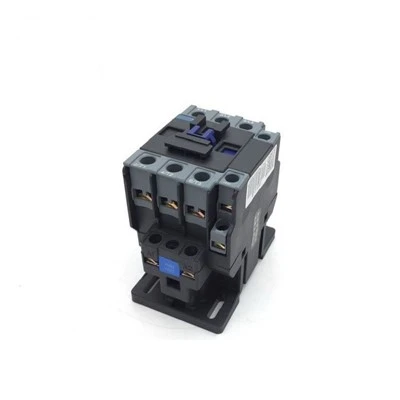
First on the list: robust enclosure materials and structural integrity. When I started in this industry, I worked with a client who opted for a cheaper plastic enclosure for a commercial building’s outdoor distribution box, thinking plastic would hold up better against rain and temperature swings. Six months later, the box cracked during a mid-summer heatwave, exposing live wires to a sprinkler system during a test run—no one was hurt, but the downtime cost the client tens of thousands of dollars. That’s why we always specify materials that meet industry standards: either heavy-gauge galvanized steel or UV-stabilized, flame-retardant thermoplastic, depending on the installation location. The enclosure shouldn’t just “hold” components; it should be rated for ingress protection (IP) that matches its environment. For outdoor boxes, that means IP65 at minimum—enough to keep out dust, rain, and low-pressure water jets. For indoor utility closets, IP20 works, because it only needs to block fingers from touching live parts. We also design enclosures with reinforced hinges and lockable doors; loose doors or easy access for kids or unauthorized maintenance staff are two of the most preventable risks. Last year, we added tamper-resistant locking mechanisms to all our outdoor units after a school district told us kids had been prying open old boxes to look at wires—something that’s now a non-negotiable feature for us.
Next, internal arc flash protection. Arc flashes are one of the deadliest electrical hazards, caused when an electrical current jumps through air or dust between uninsulated parts. A single arc flash can reach temperatures of 35,000°F—hotter than the surface of the sun—and cause burns, blast injuries, or fires. That’s why our distribution boxes are equipped with arc-resistant construction: internal barriers that separate live components from the enclosure’s interior, so if an arc does occur, it’s contained within the box instead of blowing out into the surrounding space. We also install residual current devices (RCDs), sometimes called ground fault circuit interrupters (GFCIs), as a standard feature for boxes serving residential or high-foot-traffic areas. RCDs detect tiny imbalances in current—even a few milliamps— that happen when electricity leaks to ground (like if a hand touches a live wire) and cut power in milliseconds, long before a shock can be dangerous. A few years back, we supplied a box to a restaurant that had a faulty refrigeration unit; the RCD tripped before any staff could get close enough to be shocked, and the kitchen stayed powered for all other equipment. That’s the kind of small, life-saving feature that many cut-rate suppliers skip to save a few dollars.
Then there’s overcurrent and short circuit protection. Distribution boxes are the middleman between main power lines and branch circuits, so they need to protect both the upstream power supply and the devices connected downstream. This means circuit breakers (or fuses, though breakers are more reliable and resettable) sized correctly for each branch. Too small a breaker, and it trips constantly; too large, and it won’t shut off power when there’s an overload. We work with each client to calculate the correct breaker ratings based on their load: a residential box for a 2,000 sq ft home needs a 100-200 amp main breaker, paired with 15 or 20 amp breakers for outlets and lighting, while a small factory might need a 400 amp main with higher-rated breakers for heavy machinery. We also include main disconnect switches for every box we supply—sometimes clients try to skip these, thinking the main panel outside is enough, but a disconnect switch lets electricians safely isolate the entire box for maintenance, without turning off power to the whole building. That simple switch has prevented countless electrocutions during repair work, and it’s non-negotiable in every unit we ship.
Thermal management is another feature that’s easy to overlook, but critical for long-term safety. Electrical components generate heat when in use, and without proper ventilation, that heat can build up, melt insulation, or start a fire. For indoor boxes, we add small, dust-proof vents near the top and bottom to allow airflow without letting debris inside. For outdoor boxes in hot climates, we use enclosures with built-in heat sinks to dissipate excess heat, and we avoid sealing components too tightly. I’ve seen a box in Phoenix that failed because it was installed in a direct sun spot with no ventilation; after a year, the internal wiring insulation broke down from constant high heat, leading to a short circuit. Now, all our distribution boxes are tested under extreme temperature conditions—from -20°F in Alaska to 120°F in Arizona—to make sure they won’t overheat. We also include temperature labels on the enclosure, so electricians can quickly check if internal temperatures are within safe limits during inspections.
Labeling and documentation might seem like a minor detail, but they’re huge for safety. When an electrician needs to replace a breaker or troubleshoot a circuit, they shouldn’t have to guess which breaker controls the kitchen or the hallway. That’s why every distribution box we supply has clear, durable labels on each breaker and disconnect switch, matching a printed circuit diagram we provide with every unit. We use heat-resistant vinyl labels that won’t peel or fade over time, even in outdoor sun or high-heat environments. For commercial boxes with many circuits, we add color-coding to breakers and labels, so at a glance, someone can tell if a circuit is for lighting, power, or HVAC. We also include a UL (Underwriters Laboratories) or CE (Conformité Européenne) mark on the enclosure, so buyers know the box has been tested to meet strict electrical safety standards. Too many uncertified boxes on the market don’t have these marks, meaning they haven’t been tested for fire resistance, shock protection, or structural integrity—taking that mark off is a red flag for hidden risks.
Environmental resistance goes beyond just IP ratings, too. Distribution boxes installed in coastal areas need to resist corrosion from salt air, so we use enclosures with a powder-coated finish instead of standard paint, which can flake off and let salt reach the steel. We also use tinned copper wiring connections for these boxes, which don’t corrode as easily as bare copper. For areas prone to earthquakes, we design boxes with reinforced mounting brackets that can withstand movement without shifting or pulling wires loose. Last year, a client in Hawaii told us their old distribution box had fallen off a wall during a minor earthquake, exposing live wires to the ground; our units include brackets tested to meet seismic safety standards, so that problem never happens with our products.
I know some contractors or property managers might push back on the cost of these features, but let’s be honest: the cost of not having them is way higher. A single electrical fire from a poorly built distribution box can destroy a home, a business, or even take a life. The time spent repairing a failed box, the downtime for a factory, the liability from an injury—all of that adds up to far more than the extra few dollars it costs to build a safe, feature-rich distribution box. At our company, we don’t cut corners on safety, because we’ve seen the consequences of doing that too many times. Every box we supply is built with the same care we’d want for our own homes or businesses.
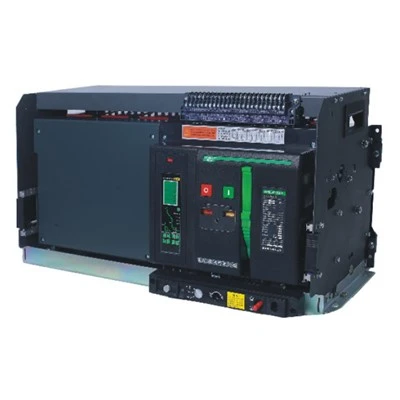
If you’re in the market for a reliable, safety-focused distribution box—whether it’s for a residential project, commercial building, or industrial facility—we’re here to help. Our team can work with you to assess your specific environment, load requirements, and safety needs, and provide a customized solution that meets all industry standards. We stand behind every unit we ship, with full testing and documentation to ensure it’s built to last and keep people safe. Don’t compromise on electrical safety—reach out to our team today to discuss your procurement needs.
Smart Circuit Breaker References
- National Electrical Code (NEC), Article 312: Wiring Methods and Materials for Cabinets and Boxes
- International Electrotechnical Commission (IEC) Standard 60529: Degrees of Protection Provided by Enclosures (IP Code)
- Electrical Safety Foundation International (ESFI): Arc Flash and Arc Blast Safety Guidelines
- Underwriters Laboratories (UL) Standard 67: Electrical Enclosures for Control and Utilization Equipment
Wenzhou Lanen Electrical Co., Ltd.
Wenzhou Lanen Electrical Co., Ltd. is one of the most professional distribution box manufacturers and suppliers in China, also supports customized service with low price. Please feel free to buy CE approved distribution box made in China here from our factory. Contact us for more discount information.
Address: Zhiguang Liushi Town Yueqing City Wenzhou City Zhejiang Province
E-mail: lanen@luyele.cn
WebSite: https://www.lanenelectrical.com/
