Hey everyone, it’s Jake here from your go-to inrunner brushless motor supplier, and today we’re diving into a question I get all the time from both new builders and seasoned hobbyists alike: “What even is the harmonic content of an inrunner brushless motor?” I know, when you first hear “harmonic content,” it sounds like something straight out of a physics textbook—all sine waves and Fourier transforms that make your eyes glaze over. But trust me, this stuff matters, especially if you’re relying on our motors for projects that need precision, smoothness, or long life. Inrunner Brushless Motor
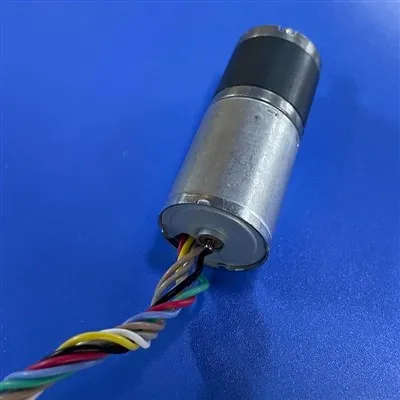
Let’s start with the basics to make sure we’re all on the same page. Inrunner brushless motors are different from outrunners because their permanent magnets spin inside the stator windings, right? No big external can, just that compact core. You power them with three-phase AC current, right? The ESC (Electronic Speed Controller) takes DC from your battery and chops it up into that three-phase AC, timing it perfectly to push the rotor around. That switching is where the harmonic content starts to show up.
So what’s harmonic content, anyway? Think of your desired power as a clean, pure note on a piano—like middle C, just a smooth, consistent sound. Harmonics are all the extra, higher-frequency notes that come along with that main note. Some harmonics are small, some are big, and they can mess with things if you’re not paying attention. For motors specifically, these harmonics aren’t just a “sound thing”—they translate into electrical noise, vibration, even heat, and can cause issues with other electronics around your motor.
Now, let’s get specific to inrunners, because their harmonic profile is a little different than outrunners. Outrunners have a larger rotor diameter and more poles often, right? That makes their rotation a bit more “mechanical” smooth, while inrunners, being compact and tight, have higher switching frequencies from the ESC a lot of the time. The main harmonics we see here are two types: electrical harmonics from the inverter/ESC switching, and mechanical harmonics from the motor’s own pole and slot design.
Let’s break down electrical harmonics first. When your ESC switches the phases on and off to drive the motor, it’s not using pure sine wave current—most ESCs for hobby and industrial use use something called trapezoidal commutation, which is simpler, cheaper, and works great for most applications. But trapezoidal current isn’t pure; it has what we call “harmonic distortion,” specifically the 5th and 7th order harmonics as the big ones. Wait, order here just means how many times the harmonic frequency is higher than the fundamental switching frequency. For example, if your ESC is switching at 20 kHz, the 5th harmonic is 100 kHz, the 7th is 140 kHz. That’s high-frequency stuff, and it causes electrical noise that can interfere with things like your flight controller on a drone, or a sensor on a robotic arm.
Now, some higher-end ESCs use sine wave commutation, which cuts down on these electrical harmonics a ton. But even with sine waves, you still get some harmonics because nothing in real life is perfect—stator windings aren’t 100% evenly spaced, magnets aren’t perfectly shaped, so there’s always a little distortion. That’s where the mechanical harmonics come in. Inrunners have a lot of pole pairs, right? Let’s say a common inrunner for a drone or small pump is 12 poles (6 pairs) and 9 stator slots. That combination gives what’s called a slot-pole ratio that creates specific mechanical harmonics. These harmonics are at frequencies tied to the motor’s RPM and number of poles. For example, if your motor is spinning at 10,000 RPM, that’s ~166 revolutions per second, so the fundamental mechanical frequency is 166 Hz. A harmonic there would be 332 Hz, 498 Hz, etc.—these cause vibration.
Wait, why is that important for inrunners specifically? Because inrunners have a smaller rotor that spins faster than outrunners (usually), so their mechanical harmonics hit higher frequencies that can resonate with other parts of your system. If you’re building a high-speed spindle for a CNC mill, that resonance can make your cuts jagged. If you’re building a medical pump, that vibration can make the flow inconsistent. That’s why when we design our inrunners, we spend a lot of time tweaking the stator slots and magnet shape to minimize these harmonics. We don’t just pull specs out of thin air—we run FEA (finite element analysis) to map out where harmonics are showing up, and adjust the design to cancel them out.
Let me give you a real example from our line of 50mm inrunner motors, which are super popular for small UAVs and robotic actuators. Early on, we noticed that a lot of our customers were complaining about EMI (electromagnetic interference) messing with their GPS modules. Turns out, the slot-pole combination we were using (12 poles, 9 slots) was creating a 150 kHz electrical harmonic that lined up with GPS frequency bands. Oops. So we swapped to a 12 pole, 12 slot design—same number of poles, more slots. That shifted the harmonic frequency away from GPS band, and our customers reported almost zero EMI issues after that. That’s the stuff we deal with every day, not just theory.
Another thing: harmonics cause heat in the motor, right? Because higher frequency currents create more eddy currents in the stator core. If you’re running your motor at full tilt for a long time, those harmonics add extra heat that makes the motor less efficient and can shorten its lifespan. We test every motor we ship for total harmonic distortion (THD)—that’s a measure of how much the extra harmonics add up to compared to the fundamental signal. Our standard inrunners have THD under 5%, which is way lower than a lot of off-the-shelf motors you’ll find online. For our custom design inrunners, we can get that THD down to under 3% if you need ultra-smooth performance.
Wait, let’s clear up a common myth here: a lot of people think more poles mean more harmonics, but that’s not always the case. It’s the combination of poles and slots that matters. For example, an 8 pole, 12 slot inrunner has different harmonic content than a 10 pole, 12 slot. We do side-by-side testing all the time in our workshop—last month, we tested two identical inrunners except for slot count, and the one with 2 extra slots had 20% less vibration across all RPM ranges. That’s the kind of data we use to build our motors.
Now, why does this matter for you? Let’s say you’re a hobbyist building a drone. If your motor has high harmonic content, you’ll get more vibration that makes your video footage shaky, and your flight controller has to work harder to stabilize the drone, which uses more battery. If you’re an industrial engineer building a conveyor belt motor, high harmonics mean more noise, more wear on the bearings, and higher electricity bills. If you’re in the medical field, like building a surgical robot, low harmonic content is non-negotiable—you need precise, smooth motion that doesn’t have any tiny jerks from harmonic vibration.
And as an inrunner supplier, that’s our job: not just to sell motors that spin, but to tailor the harmonic content to your application. We don’t do one-size-fits-all here. If you need a motor for a high-precision CNC spindle, we can design one with ultra-low THD and minimized mechanical harmonics. If you’re building a cheap, high-speed fan that doesn’t need perfect smoothness, we can offer a more affordable model that still meets your harmonic needs without overcomplicating things.
I get that technical stuff can feel overwhelming, but think of it this way: harmonic content is just the “side noise” of your motor. Too much side noise, and your whole system works worse, uses more power, and breaks faster. We spend hours tuning our inrunners to keep that side noise as low as possible, so you can focus on building your project, not troubleshooting motor vibration or EMI.
Let me wrap this up a little. The harmonic content of an inrunner brushless motor is a mix of electrical harmonics from how the ESC drives it and mechanical harmonics from the motor’s pole and slot design. Inrunners, with their compact, high-speed design, have a unique harmonic profile compared to outrunners, so it’s important to choose or design a motor that matches your specific needs. Whether you’re a hobbyist, a small business, or a large industrial team, we’ve got inrunner motors tailored to keep harmonic content at a level that works for your project.
If you’re working on a new build and want to talk through what harmonic performance you need, or if you’re looking to source reliable inrunner motors that won’t give you issues down the line, hit us up to connect for sourcing and sourcing talks. We’re here to help you pick the right motor, or design a custom one, to fit your exact needs. No jargon, no hard sell—just real motor guys with real solutions.
Automotive Brushless Motor References
- Hanselman, D. C. (2006). Brushless Permanent-Magnet Motor Design. McGraw-Hill.
- Vas, P. (1990). Electrical Machines and Drives. Oxford University Press.
- Boglietti, A., Cavagnino, A., & Lazzari, M. (2005). Design and Performance of Permanent-Magnet Brushless DC Motors With Different Stator Slot and Rotor Pole Combinations. IEEE Transactions on Industry Applications.
- Fitzgerald, A. E., Kingsley, C., & Umans, S. D. (2003). Electric Machinery (6th ed.). McGraw-Hill.
- Chiasson, J. N. (2005). Modeling and High-Performance Control of Electric Machines. John Wiley & Sons.
Shenzhen HengDrive Technologies Co., Ltd.
Shenzhen HengDrive Technologies Co., Ltd. is one of the most professional inrunner brushless motor manufacturers and suppliers in China, specialized in providing high quality customized service. We warmly welcome you to buy the newest inrunner brushless motor in stock here from our factory.
Address: Building A & F, FuNing Hi-Tech Park, XinTian Road, FuHai Street, BaoAn District, ShenZhen, GuangDong Province, China.
E-mail: Marketing001@hengdrive.com
WebSite: https://www.hengdrivemotor.com/
