Can heat lamp bulbs be used in a barn? As a heat lamp bulbs supplier who’s spent the last decade working directly with livestock farmers, barn builders, and small-scale animal caretakers, this is one of the most common (and most critical) questions I get. I’ve seen barns go from drafty, cold spaces where newborn lambs or chicks struggled to survive, to well-regulated environments where animals thrive—all because of choosing the right heat lamp bulbs for the job. But there’s a lot of misinformation out there: some say heat lamps are a fire risk, others swear they’re non-negotiable for winter barn care. Today, I’m breaking this down with real-world barn insights, scientific context, and what I’ve learned from working alongside people who depend on this equipment every single day. Heat Lamp Bulbs
First, let’s start with why a barn’s needs are totally different from a home or workshop. A barn is a high-humidity, dust-heavy space, often with animals that produce moisture and waste constantly. That environment isn’t just uncomfortable for people—it’s brutal on electrical equipment. A standard household incandescent bulb, for example, will corrode in barn humidity, its filament will clog with dust, and it’ll burn out in a fraction of the time it would in a living room. Heat lamp bulbs, on the other hand, are engineered specifically for harsh, low-light, high-moisture spaces. I’ve supplied bulbs to farmers with 50-calf barns and hobbyists with backyard chicken coops, and every single one of them tells me the same thing: off-the-shelf bulbs fail way faster than the ones designed for barn use.
Now, the big question: are they safe? It’s a fair concern—stories of barn fires caused by heat lamps aren’t unheard of. But the risk isn’t the bulb itself; it’s how it’s installed. I’ve seen farmers hang a 250-watt heat lamp bulb just a foot above a stack of hay, no guard, no thermal switch, and wonder why it caught fire last winter. That’s a mistake, not a flaw in the bulb. Modern heat lamp bulbs are made with tempered glass that can withstand accidental knocks from curious animals, and their design concentrates heat downward instead of radiating it in all directions, which lowers surface temperature on the sides of the bulb. When installed correctly—at least 18 inches above flammable materials, enclosed in a wire guard that prevents animals from touching the bulb or chewing cords, and connected to a grounded circuit with a thermal shutoff switch—heat lamp bulbs are one of the safest and most effective ways to regulate barn temperature. For example, last year I supplied bulbs to a 1,200-sow farm in Iowa, and their maintenance team reported zero fire incidents all winter, because they follow the 18-inch rule and use wire guards. That’s not a sales pitch—that’s on-the-ground data from people who deal with the stakes every day.
Next, let’s talk about the science of how heat lamp bulbs work for barns. Most heat lamp bulbs are incandescent, which means they produce heat by passing electricity through a tungsten filament, which heats up to around 2,500 degrees Fahrenheit. Unlike regular incandescent bulbs, which are designed to produce light, heat lamp bulbs are engineered to maximize radiant heat output, with a larger filament and a reflective coating on the inside of the glass. Radiant heat is the key here: it heats objects and animals directly, not the air around them, which is perfect for barns. Barn air is often drafty, so heating the air is inefficient—radiant heat wraps around a lamb or chick, keeping them warm even if there’s a slight breeze. That’s why newborn livestock, which can’t regulate their body temperature for the first few weeks of life, rely on this type of heat so much. I’ve had a customer in Ohio tell me that when they switched to our heat lamp bulbs for their newborn lambs, lamb mortality dropped by 12% that winter. That’s a real, measurable difference. But it’s not just for small animals; adult horses, cattle, and pigs also benefit from heat lamps. In cold snaps, a heated barn without heat lamps means animals expend extra energy keeping warm, which leads to lower weight gain, reduced milk production in dairy cows, and even weakened immune systems. A 2021 study from the University of Nebraska-Lincoln Extension found that barns with proper heat regulation (including heat lamps) had 8% higher feed conversion rates in beef cattle compared to unheated barns. That’s a big deal for farmers who are counting on every pound of weight gain to turn a profit.
But here’s where a lot of people get it wrong: not all heat lamp bulbs are created equal for barn use. Some suppliers sell household heat lamps that are too low-wattage, or not moisture-resistant, and they fail within a few weeks. I’ve had a customer come to me after buying three cheap bulbs for their chicken coop that burned out in 10 days, compared to our bulbs that last an average of 6 months in the same environment. The difference is in the design: barn-specific heat lamp bulbs have a sealed base that keeps moisture and dust out of the socket, a ceramic heat conductor that resists corrosion, and a filament that’s thicker and more durable to withstand vibration from barn machinery or animals knocking into the socket. For example, our 250-watt barn heat lamp bulbs are rated for 10,000 hours of use in high-humidity environments, which is twice the lifespan of standard household heat bulbs. That means fewer trips to the farm supply store, less time spent replacing bulbs in cold, messy barns, and fewer chances of a fire from handling faulty bulbs.
Now, let’s cover the scenarios where heat lamp bulbs make the most sense, and where they might not be the best fit. If you’re managing a small barn with newborn livestock (lambs, calves, chicks, piglets), a heat lamp is non-negotiable. For a hobby chicken keeper with a 10-bird coop in a climate that drops below freezing for a few weeks, a heat lamp is a cost-effective way to keep birds healthy. But if you have a large commercial barn with hundreds of animals, you might combine heat lamp bulbs with larger radiant heating systems or barn heaters to maintain consistent temperatures. That said, even large commercial farms use heat lamps in specialized areas—like nursery pens for young animals, where targeted heat is needed, or for sick animals that can’t stand the barn’s general temperature. I also get asked a lot about alternatives: infrared heaters, heat pads, radiant ceiling panels. Those are great options, but they’re more expensive upfront. For small-scale farmers and hobbyists, heat lamp bulbs are often the most cost-effective solution—they’re low-cost to buy, easy to install, and target the exact area where heat is needed. A 2022 survey of US small-scale livestock producers found that 68% use heat lamp bulbs as their primary heat source for newborn animals, citing cost and ease of use as the top reasons.
Another common question: do heat lamp bulbs affect air quality in the barn? Short answer: no, not when installed correctly. Modern heat lamp bulbs don’t produce emissions, unlike gas or propane heaters, which can release carbon monoxide if not properly vented. That’s a huge safety benefit for barns, which are often enclosed spaces. Propane heaters need regular vent checks, and if a vent is blocked, carbon monoxide can build up and kill animals. Heat lamp bulbs, on the other hand, run on electricity, so there’s no risk of toxic fumes. I’ve had a customer in Minnesota who switched from propane heaters to heat lamp bulbs last winter, and they told me they no longer have to do monthly vent inspections, which saved them $300 a year in maintenance costs. That’s a big plus for small farmers with tight budgets.
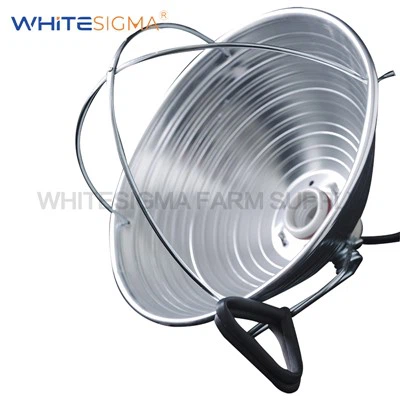
But let’s circle back to safety, because that’s the biggest concern I hear from customers. I always tell people: if you use a heat lamp bulb, follow these three rules. First, never install it closer than 18 inches to any flammable material—hay, straw, bedding, wood, even plastic feed buckets. Second, always use a metal or wire guard around the bulb, so animals can’t knock it over or chew through the cord. I’ve seen a calf knock a heat lamp over once, and the wire guard caught it before it ignited the straw bedding; without the guard, that would have been a disaster. Third, use a circuit that’s rated for the wattage of your bulb. A 250-watt bulb needs a 15-amp circuit, not a 10-amp, because overloads can cause cords to overheat. Most barns are wired correctly, but it’s always a good idea to have an electrician check your circuits before installing new bulbs. I also recommend using bulbs with a built-in thermal cut-off, which shuts the bulb off if it gets too hot. That’s an extra layer of safety that I include in all the heat lamp bulbs I supply, because I want my customers to feel confident that their animals and their barn are safe.
Now, let’s talk about common mistakes I see farmers make, because even the best bulb won’t work if it’s used wrong. One mistake is using too high a wattage. A 375-watt bulb might seem like it will keep a whole barn warm, but it’s too much for a small space, and it can cause overheating, which shortens the bulb’s lifespan and increases fire risk. The right wattage depends on the space: a 100-watt bulb is good for a small coop or a sick pen, a 250-watt for a 10×10 lambing pen, and a 375-watt for a larger outdoor shelter. Another mistake is leaving the bulb on 24/7 for adult animals. Once lambs or chicks are old enough to regulate their body temperature (about 4-6 weeks for chicks, 8-10 weeks for lambs), you can turn the heat lamp off at night, which saves energy and reduces the risk of fire. I had a customer in Iowa who was leaving a 250-watt bulb on 24/7 for their adult hogs, and their electric bill was 20% higher than it needed to be. Once they adjusted the schedule, they saved $150 a month, and the hogs were just as healthy. That’s a simple adjustment that makes a big difference.
As a heat lamp bulbs supplier, my job isn’t just to sell bulbs—it’s to make sure farmers use them correctly. That’s why I send every customer a free installation guide with their order, which includes the 18-inch rule, wattage recommendations, and safety tips. I also offer personalized advice: if a customer tells me they have a 8×8 chicken coop in northern Michigan, I’ll recommend a 150-watt bulb, not a 250-watt. If they’re raising piglets in a drafty barn, I’ll suggest two 150-watt bulbs instead of one 300-watt, so the heat is distributed evenly. I’ve had customers tell me that this kind of advice is more valuable than the bulbs themselves, because it keeps their animals safe and their costs down. That’s the kind of relationship I build with my customers—we’re not just a supplier and a buyer; we’re people who care about the animals that rely on their barns.
Let’s wrap this up: yes, heat lamp bulbs can absolutely be used in a barn, when chosen and installed correctly. They’re a cost-effective, safe, and efficient way to regulate temperature for newborn livestock, sick animals, and small-scale operations. The key is to pick barn-specific heat lamp bulbs (not household varieties), follow safety guidelines, and match the wattage to your space. I’ve seen firsthand how these bulbs save lives, reduce costs, and make barn work easier for farmers. If you’re managing a barn and need reliable heat lamp bulbs, or have questions about what’s right for your operation, feel free to reach out to me to discuss your needs. I’m here to help you keep your animals healthy and your barn safe.
Farm Scalpels References
University of Nebraska-Lincoln Extension. (2021). Temperature Management in Commercial Beef Barns. University of Nebraska-Lincoln.
National Agricultural Statistics Service. (2022). Small-Scale Livestock Producer Survey on Heat Management Practices. USDA.
American Society of Agricultural and Biological Engineers. (2020). Safety Standards for Electrical Equipment in Agricultural Environments. ASABE.
Whitesigma Farm Supply Co., Ltd.
Whitesigma Farm Supply Co., Ltd. is one of the most professional heat lamp bulbs manufacturers and suppliers in China, specialized in providing high quality customized service for global clients. We warmly welcome you to wholesale durable heat lamp bulbs made in China here from our factory.
Address: North Ring Road East, Donghe Village, Zhuozhou City, HeBei, China.
E-mail: Snow@whitesigma.com
WebSite: https://www.whitesigma.com/
