Okay, so I’m sitting in my workshop on a Tuesday morning, wiping sawdust off the latest hand cart I just put together, and a construction foreman texted me out of the blue asking, “Wait, can your hand carts even haul actual construction materials? I’ve only ever seen ‘em for moving groceries.” Fair question, honestly—most people picture those tiny metal jobs your dad used to drag lawn clippings around on, not carrying 50-pound bags of concrete or stacks of cinder blocks. But here’s the thing: I’ve been supplying hand carts for 7 years, and I’ve seen these things work harder than half the guys on job sites. Hand Cart

First off, let’s break down what construction materials even mean for most small-to-medium jobs. You’re not talking high-rise skyscraper concrete pours—those need big forklifts and dump trucks, duh. We’re talking the stuff for a backyard patio, a home renovation, a small commercial build where access is tight. Like, when the new sidewalk on Maple Street only has a narrow gate that won’t fit a skid steer? That’s where hand carts shine. I swear, last spring a guy from a masonry crew hauled 80 80-pound bags of mortar mix through that exact gate in two days using two of my heavy-duty steel hand carts. And these aren’t the flimsy ones from the hardware store that bend if you look at ‘em wrong—ours have reinforced axles and 10-inch rubber tires that don’t get stuck in mud or scrape up asphalt.
Wait, but some people will say “hey, a wheelbarrow does that too!” Yeah, but a wheelbarrow only holds one bag at a time, and you gotta balance it. My hand cart? It’s got a flatbed, so you can stack three or four mortar bags, or a bundle of 2x4s, or even a stack of roofing shingles without worrying about tipping over. I’ve had electricians use ‘em to carry reels of wire and junction boxes for residential rewiring jobs, tilers hauling boxes of floor tiles, even plumbers moving length of PVC pipe through tight crawl spaces. The biggest win here is maneuverability—you can turn on a dime, wheel ‘em through doorways, up ramps, over grass, no problem. Last summer, a deck builder used mine to haul 50 pounds of deck screws, a circular saw, and two pre-cut 8-foot 2x6s up a wooden ramp to a backyard with no concrete access. Told me he would’ve had to make 12 trips with a wheelbarrow, and with the hand cart he did it in 3.
Of course, there are limits—don’t get me wrong, I’m not gonna sell you a hand cart and tell you it replaces a bulldozer. If you’re moving 2000 pounds of granite countertops, yeah, you need a forklift. But for the 90% of construction jobs that are small, tight-access, or just need to cut down on trip time? These things are game changers. Also, the cost factor—renting a hand cart is like $20 a day, but buying one (which a lot of small contractors do from me) is a one-time cost that lasts 5+ years if you take care of it. Way cheaper than renting a dump hopper or hiring extra labor for all those trips.
I should mention, a lot of contractors come to me because they tried cheap hand carts from big box stores and they broke after a week. The key features for construction use: heavy-duty steel frame, solid rubber tires (not the foam ones that go flat in cold weather), reinforced corners on the flatbed so you don’t dent it when you drop a bag of gravel, and comfortable handles so your guys don’t have blisters at the end of the day. I actually test every single cart before it leaves my shop—last month I loaded one up with 500 pounds of concrete blocks and wheeled it around the parking lot for 10 minutes to make sure the axle doesn’t wobble. No cutting corners here, because if my customer’s job slows down because a cart breaks, they’re not gonna come back.
Another thing I’ve noticed: lately, more people are using these for “just-in-time” material delivery on job sites. Like, instead of dropping a whole pallet of bricks at the front gate and making everyone carry ‘em, you can load the hand cart up with 20 bricks, wheel it right to where the masons are working. That cuts down on downtime—masons don’t have to stop what they’re doing to grab materials, they just have ‘em right there. I had a foreman tell me last month that using hand carts for that cut his job time by 15%—that’s huge when you’re on a deadline.
Wait, but what about safety? I get why some guys are skeptical. Carrying heavy stuff, you gotta use the cart right, not try to cram too much on it. That’s why I always give customers a quick tutorial when they pick up their cart—tell ‘em to distribute weight evenly, don’t overload past the rated capacity (which is 1000 pounds for our heavy-duty models, for the record). A lot of the injuries on job sites with hand carts are from people trying to carry too much, not from the cart itself failing. If you use it correctly, it’s way safer than lifting 50-pound bags by hand all day—reduces back strain, which is the number one complaint I hear from construction workers.
I also sell the add-ons that make construction even easier: bungee cords for securing loose materials, a metal lip at the front to stop things from sliding off, even a folding side rail if you’re carrying long stuff like pipe or 2x4s. A few guys have started using them to carry small tools too—they’ll set their drill, level, and tape measure right on the flatbed, no more leaving tools on the ground and losing ‘em (which is a huge waste of time and money).
Now, let’s be real—this isn’t for every construction scenario. If you’re working on a high-rise with a loading dock that can fit a forklift, yeah, stick with that. But if you’re doing a residential remodel, a small commercial build, a deck or patio, or any job where space is tight and you don’t wanna waste time making 10+ trips? A hand cart works perfectly. I’ve had customers tell me they switched from wheelbarrows to my carts and cut their material moving time in half, some even in a third.
Here’s the thing, I started this business because I noticed a gap—everyone was pushing big, expensive equipment for every job, but small contractors needed something affordable and reliable. My hand carts aren’t fancy, but they get the job done. I’ve had guys come back to buy more because their crew liked ‘em, or because their old one finally wore out. Last week, a concrete finisher told me his cart had lasted 6 years, and he was back for a second one for his new side business doing stamped concrete patios.
If you’re a contractor, a handyman, or even someone tackling a big construction project at home (like that backyard patio you’ve been putting off for years), don’t sleep on a good hand cart. It’s not just for groceries anymore—trust me, I’ve seen ‘em move enough construction materials to know they work.
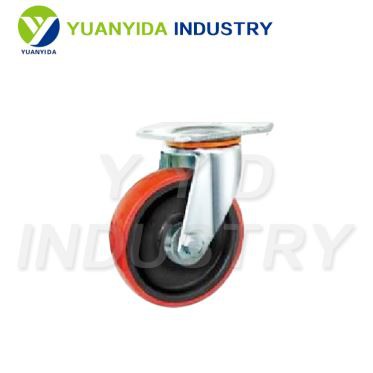
If you’re in the market for a reliable, heavy-duty hand cart for your construction needs, I’d be stoked to chat more. We can go over capacity, add-ons, even customizations if you need something specific. Just reach out, and we’ll figure out what works for your job.
Flower Trolley References:
- Occupational Safety and Health Administration. (2022). Back Injuries in Construction. U.S. Department of Labor.
- National Association of Home Builders. (2023). Small Scale Construction Efficiency Report. NAHB Press.
- Construction Equipment Guide. (2021). Compact Equipment for Tight Access Job Sites. Green Builder Media.
Qingdao Yuanyida Industrial and Trade Co., Ltd.
Qingdao Yuanyida Industrial and Trade Co., Ltd. is one of the most professional hand cart manufacturers and suppliers in China. Feel free to wholesale high quality and hot selling hand cart from our factory. There a wide selection of logistics trolleys at your choice. Also, customized service is available.
Address: Factory Add: No.1 Yunxing Rd, Yinghai Industrial Park, Jiaozhou, Qingdao, CHINA 266300
E-mail: info@qd-yuanyida.com
WebSite: https://www.yydindustry.com/
