If you’ve ever driven along a stretch of highway that cuts through a remote industrial park, or stood outside a storage facility holding thousands of dollars’ worth of commercial inventory, you’ve probably glanced at a perimeter security fence and assumed it was just that: a fence. A line of metal posts, some welded mesh, a few hinges and a lock—hardly something that needs to be tested for how it stands up to earthquakes. But as a perimeter security fence supplier who’s spent more than a decade designing, testing, and installing these systems across seismically active regions from coastal California to northern Japan, I can tell you that seismic resistance isn’t an afterthought. It’s a non-negotiable performance metric, and one that too many facility owners overlook until the ground starts to shake. Perimeter Security Fence
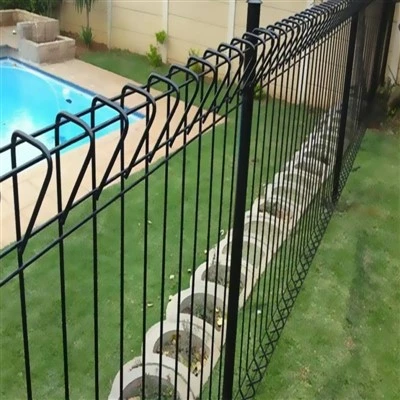
Let me start with a common misconception. When people talk about security, they usually mean resisting breaches: a truck ramming the gate, a climber cutting through the mesh, a person trying to crawl under a fence section during a late-night break-in. That’s critical, yes, but seismic resistance serves a different set of needs entirely. A fence that stays standing during an earthquake isn’t just about protecting the fence itself. It’s about preserving the line of defense that keeps unauthorized personnel out, especially when other infrastructure—like walls, gates, or access control systems—might be failing. A collapsed perimeter fence can leave a facility vulnerable not just to theft in the immediate aftermath of a quake, but also to vandalism, unapproved access, and even contamination if it’s a site handling hazardous materials.
So what exactly does seismic resistance for a perimeter security fence entail? It’s not a single number or a quick test. It’s a combination of how the fence is engineered, the materials used, and how it’s installed to move with the ground, instead of against it. Let’s break that down.
First, the design and materials. Most standard chain-link or basic ornamental fences aren’t built for seismic activity. They use thin, flexible posts set in shallow concrete footings, which can pull loose or crack when the ground shifts. Our security fences, by contrast, use thick galvanized steel posts—usually 3 to 6 inches in diameter, depending on the height of the fence—engineered to withstand both horizontal and vertical ground movement. For mesh, we use heavier gauge welded steel panels instead of chain link; chain link, while flexible, can stretch or separate at the welds during sustained shaking, creating gaps that a determined intruder can exploit. Welded mesh, when properly tensioned, stays intact enough to maintain a physical barrier even if the posts shift slightly.
But the biggest difference comes in how we install the posts. A lot of fence installers just dig a hole, drop in a post, pour concrete, and call it a day. For seismic zones, that’s a recipe for failure. We use deep, reinforced concrete footings—often 3 to 5 feet deep, wider than standard footings—to anchor each post to the underlying soil. For sites with soft or loose soil, we even add steel rebar or helical piers to stabilize the footings, preventing them from shifting or settling during an earthquake. We also use flexible couplings at the points where fence sections connect, instead of rigid welds or bolts that can snap when the frame moves. Those couplings let each section shift independently, absorbing ground movement instead of transferring force to adjacent posts.
I’ve seen the difference between a standard fence and a seismic-rated fence firsthand. A few years back, we installed a perimeter system for a warehouse in Los Angeles, a region with high seismic activity. Two years later, the 2019 Ridgecrest earthquake hit. A few miles away, a neighboring facility with a generic chain-link security fence had half its posts pull out of the ground, and the other half leaned so far that the fence collapsed in 20-foot sections. Our client’s fence? It stayed standing. The ground shifted several inches during the quake, but our footings held, the couplings absorbed the movement, and the mesh panels remained intact. That’s the value of seismic resistance—it turns a potential failure point into a reliable barrier when you need it most.
Of course, seismic resistance isn’t one-size-fits-all. A fence in a low-seismic area like the Midwest doesn’t need the same level of engineering as one in the Pacific Northwest, where earthquakes are frequent and often intense. We work with each client to assess their specific site, using local seismic hazard data to tailor a system that meets their needs. For example, a data center in Seattle—where earthquakes can register above 7 on the Richter scale—needs a higher seismic rating than a small retail storage facility in Texas, where quakes are rare and mild.
There’s also a common debate in the industry about how to test seismic performance. Some suppliers rely on theoretical calculations, while others use real-world testing. Our approach involves both. We run finite element analysis (FEA) on every fence design to simulate how it will respond to different ground movement scenarios, from small, frequent tremors to large, rare earthquakes. We also conduct physical tests, pulling fence sections and posts in controlled conditions to measure their ability to withstand force and movement. Recently, we collaborated with a structural engineering firm in Japan to test a custom fence design for a port facility in Tokyo, simulating the ground movement expected from a major quake along the Japan Trench. The fence passed with flying colors, with only minor, repairable movement—no structural failure, no gaps, no lost barrier integrity.
Another often-overlooked factor in seismic resistance is gate systems. Perimeter security isn’t just fence panels—it’s the gates that control access, and those are often the weakest point during an earthquake. A large rolling gate or a swing gate can pull off its tracks if the posts anchoring it shift, leaving a wide, unprotected opening. That’s why we engineer our gate posts to be twice as thick as standard fence posts, with extra-reinforced footings and heavy-duty hinges and tracks designed to move slightly without dislodging the gate. We also add a locking mechanism that engages automatically if the gate shifts during a quake, preventing it from swinging open or slamming shut and damaging the frame.
I’ll be honest: for many facility owners, the first time they think about seismic fence resistance is after an earthquake has already damaged their property. That’s a costly mistake. Seismic-rated security fences aren’t just an added expense; they’re a long-term investment in protecting your facility, your inventory, and your people. In a post-quake environment, when emergency services may be delayed, a intact perimeter fence is one of the first lines of defense against looting and unauthorized access. For sites handling sensitive materials—chemical plants, energy facilities, data centers—the consequences of a breached perimeter after an earthquake can be catastrophic.
We’ve worked with dozens of clients across seismic zones, and one thing that consistently surprises me is how many of them didn’t even know seismic-rated security fences were an option. They’d been buying generic fence systems for years, never stopping to ask how they would hold up if the ground shook. That’s why we’re transparent about our testing and our engineering processes—we don’t cut corners, and we don’t overpromise. Every fence we install comes with a performance guarantee specific to its seismic rating, and we provide clients with documentation to prove their system meets local building codes and seismic standards.
If you’re a facility owner, a facilities manager, or a contractor responsible for securing a site in a seismically active area, the question isn’t just “does my fence work for daily security?” It’s “will my fence work when the ground moves?” Seismic resistance is a critical part of that answer. It’s not just about building a fence that stands tall—it’s about building a fence that adapts, that absorbs force, and that keeps working when other parts of your site might be failing.

At the end of the day, a perimeter security fence is only as good as its weakest point. For too long, that weakest point was seismic vulnerability. Now, with advances in materials science and engineering, it doesn’t have to be. If you’re evaluating security fence systems for a site in a seismically active region, or if you want to upgrade your existing fence to improve its seismic performance, we’re here to help. We work with you to assess your site, design a custom system that meets your security needs and seismic requirements, and install it with the attention to detail that comes from decades in the industry. Don’t wait until the ground shakes to realize your fence isn’t up to the task. Reach out to us today to start a conversation about securing your perimeter with seismic-resistant fence technology.
Commercial Fencing References:
- Federal Emergency Management Agency (FEMA). 2018. Seismic Design Guidelines for Low-Rise Buildings and Structures. Washington, D.C.: FEMA.
- American Society of Civil Engineers (ASCE). 2021. Minimum Design Loads and Associated Criteria for Buildings and Other Structures (ASCE 7-21). Reston, Virginia: ASCE.
- Structural Engineers Association of California (SEAOC). 2020. Perimeter Fence Design for Seismic Zones. Sacramento, California: SEAOC.
- International Code Council (ICC). 2022. International Building Code (IBC) Chapter 33: Fences and Gates. Washington, D.C.: ICC.
Anping County Chengrun Metal Products Co., Ltd.
With abundant experience, we are one of the most professional perimeter security fence manufacturers and suppliers in China. Please feel free to buy premium perimeter security fence for sale here from our factory. All customized metal products are with high quality and competitive price.
Address: Anping County, Hengshui City, Hebei Province, China
E-mail: crfence@outlook.com
WebSite: https://www.chengrunfence.com/
