If you’ve ever stood in a bustling hospital supply closet, rummaging through shelves stocked with everything from syringes to exam gloves, you’ve probably wondered: what actually counts as a medical consumable—and where do PPE fit into that line? As a medical consumables supplier who’s spent the last eight years walking the floors of clinics, urgent care centers, and private practices across the Midwest, I’ve fielded this question from procurement managers, nurses, and even small business owners trying to stock their first clinic. It’s not just a technical detail, either: getting the line between PPE and medical consumables right means the difference between a clinic having the right supplies on hand when they need them, and scrambling to order a last-minute shipment that might not arrive in time. Let’s break this down the way I do with my team—rooted in real-world clinical practice, not just textbook definitions. Medical Consumables
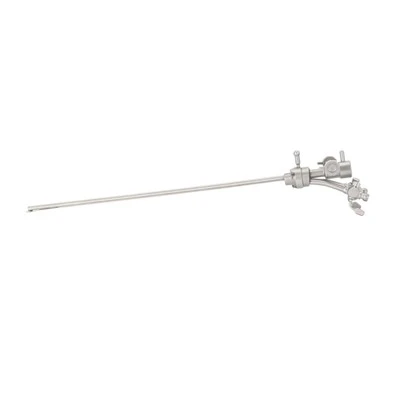
First, let’s define the two terms side by side, because that’s where most confusion starts. Medical consumables, in basic terms, are single-use or disposable items designed to be used during patient care, then discarded—no reprocessing, no reuse, no exceptions. Unlike durable medical equipment (DME)—think wheelchairs, hospital beds, or blood pressure cuffs that get cleaned and reused between patients—consumables are meant to be a one-time use. That’s a critical distinction for any supplier, because it shapes how we package, store, and price every item.
PPE, or personal protective equipment, is a subset of this, but not all PPE automatically falls under medical consumables. Let’s clarify that: PPE includes any gear meant to protect healthcare workers (or patients, in some cases) from exposure to hazards like infectious diseases, chemical spills, or physical damage. But when is that PPE a medical consumable, versus, say, a piece of industrial safety gear for a construction site? The line comes down to the clinical setting and the intended use. A set of nitrile gloves, for example, is industrial PPE if it’s used to handle toxic paints or chemicals, but it’s a medical consumable when it’s used to examine a patient, draw blood, or dress a wound. That’s a difference I’ve seen procurement teams mess up more than once: ordering industrial-grade gloves at a 30% lower cost, only to find they don’t meet FDA standards for exposure to bodily fluids.
Let’s go through the most common PPE items and map them to medical consumable status, because this is where practicality matters most. Start with gloves: nitrile, latex, vinyl, even polyisoprene. Any glove labeled for patient care, with FDA 510(k) clearance or a CE mark for medical use, is a medical consumable. I remember early in my career, we had a customer who ordered 10,000 industrial latex gloves for a free flu clinic—by the time we flagged it, they’d already used half, and the state health inspector sent them a warning because those gloves weren’t rated for contact with blood or respiratory secretions. That’s the kind of mistake that comes from not knowing the line.
Next, face masks. Here, the categorization gets a little more nuanced, but it still ties to use. Surgical masks—designed to block large respiratory droplets during procedures, with ASTM F2100 ratings for fluid resistance and bacterial filtration—are definitely medical consumables. N95 respirators, too, fall into this category, as long as they’re NIOSH-approved or equivalent, because their intended use is to protect healthcare workers from airborne pathogens during patient care. What about a cloth face mask you buy at a grocery store? That’s not a medical consumable, and it never will be, because it’s not designed for clinical patient care. I’ve had clinic managers ask if we can supply cloth masks for front desk staff, and we always push back—cloth doesn’t meet the barrier standards for medical settings, so it leaves workers and patients unprotected.
Then there’s eye and face protection: goggles and face shields. Again, it’s all about use. A pair of safety goggles for a lab technician handling chemicals is industrial PPE, but a disposable face shield for a surgeon during an operation is a medical consumable. The key here is that medical PPE is designed to be single-use or, in some cases, low-level reusable for one patient before disposal—never meant to be cleaned and repurposed across multiple patients. A face shield that’s been splattered with a patient’s bodily fluids can’t be disinfected enough to reuse, so it counts as a consumable.
What about respirators beyond N95s? PAPRs (powered air-purifying respirators) fall into a gray area, but most of their components—like the filters, hoods, and battery packs—are consumables. The battery itself might be a reusable component, but the filters that trap airborne pathogens? Absolutely a medical consumable, because they’re single-use and critical for patient care in settings like emergency rooms or tuberculosis clinics.
Now, let’s talk about the items that sometimes get mislabeled as PPE, but are 100% medical consumables. That’s important because even if an item isn’t PPE, it’s still part of the same supply chain. Things like gown liners for surgical drapes, suction catheters, or even sterile wipes used to prep a patient’s skin before an injection—those are all consumables, and they’re often ordered alongside PPE, so it’s easy to lump them together. But as a supplier, we separate them because they have different storage requirements: sterile consumables need controlled temperature and humidity, while some PPE (like non-sterile exam gloves) don’t. That small difference matters for a clinic that might only have one climate-controlled storage closet.
I also want to address a common myth among small clinic owners: that all PPE is exempt from being classified as a medical consumable for insurance purposes. No, that’s not true. Insurance providers categorize PPE that’s used in direct patient care as medical consumables, which means they’re eligible for reimbursement under most clinic insurance plans. Industrial PPE, though, is often categorized as a business expense, not a medical one. That’s a big deal for small practices, where every dollar counts—getting the classification right can add hundreds of dollars back to their annual budget for supplies.
Let me share a recent example from a customer of mine, a family practice clinic in Des Moines. They were spending about $2,000 a month on PPE, but their procurement manager didn’t know that some of their orders were for non-medical-grade gloves. They switched to our medical-grade nitrile gloves, which met all FDA standards, and it ended up costing them 15% less than their previous industrial brand. Why? Because the industrial gloves were bulked with extra thickness that wasn’t necessary for patient care, while our medical consumable gloves were made to the exact specifications needed for exams and minor procedures. That’s the kind of value we prioritize as a supplier—not just a product, but the right product for the use case.
Now, what about regulatory definitions, because this is where things can get complicated. In the U.S., the FDA classifies medical devices, including consumables, into three categories, and PPE that’s a medical device falls into Class I, II, or III depending on risk. For example, surgical masks are Class I, exam gloves are Class I, and N95 respirators are Class II. Industrial PPE, on the other hand, is regulated by OSHA, not the FDA. That regulatory line is the backbone of what makes a PPE item a medical consumable—if it’s regulated by the FDA for clinical use, it’s a medical consumable; if it’s regulated by OSHA for workplace safety, it’s not, even if it looks similar. I’ve seen knockoff N95s that were OSHA-approved but not FDA-cleared get sold as medical consumables, and those are the ones that get clinics fined during inspections. As a supplier, we only carry PPE that meets both regulatory standards when it’s used in medical settings, because that’s the only way to keep clinics compliant.
Another angle: single-use vs. multi-use. All medical consumables, including medical PPE, are single-use. There’s no exception. That’s why when the pandemic hit, there was so much confusion around reusing N95 respirators—because originally, N95s were designed as single-use medical consumables, and reusing them posed a risk of pathogen transmission. Later, the FDA issued emergency guidelines for reuse during shortages, but that was a temporary exception, not a change in the core definition. Industrial PPE, though, can often be multi-use, which is why it’s not a medical consumable. A pair of industrial safety goggles can be cleaned and used for weeks, while a medical face shield is thrown away after one patient interaction.
Let’s talk about the practical implications for suppliers, because that’s what this blog is really from my perspective. As someone who’s been in this business for years, I know that a clinic’s supply chain is only as strong as the clarity between what’s a consumable and what’s not. Too often, suppliers lump all PPE into one category, which leaves customers ordering the wrong products, overpaying, or risking compliance issues. That’s why we break it down for every customer: when you order PPE for patient care, it’s a medical consumable, and here’s exactly what that means for your inventory, your budget, and your regulatory compliance.
I also want to address a common question from new clinic owners: do all PPE items count as medical consumables in every setting? No, it depends on the use case. A dental office, for example, uses disposable dental gloves and lead aprons for X-rays, both of which are medical consumables. But a veterinary clinic might use the same type of gloves, which are also medical consumables, because they’re used for animal patient care. The use case is the constant, not the type of facility. I’ve had a veterinary practice ask us for industrial gloves once, and we explained that their use was direct patient care, so our medical-grade gloves would be safer and more cost-effective for them. That’s the kind of consultation we prioritize—we don’t just sell products, we help customers make the right choices.
Now, let’s wrap this up with what matters most for anyone working in a medical setting: getting this right isn’t just a technical detail, it’s about patient and staff safety. A nurse wearing an industrial glove that doesn’t block bodily fluids is at risk of exposure, and a clinic using non-compliant PPE can face fines or even lose their ability to accept Medicaid and Medicare patients. As a medical consumables supplier, our job is to make this clear, to stock the right products, and to help navigate the gray areas so our customers don’t have to.

If you’re a clinic manager, procurement director, or small business owner looking to streamline your supply chain, ensure regulatory compliance, or find a consistent, reliable source for medical consumables including medical-grade PPE, we’re here to help. Reach out to our team to discuss your specific needs, whether you run a single urgent care clinic, a multi-practice group, or a private specialty care office. We can walk through your current inventory, point out areas where you might be overspending or at risk, and provide customized solutions that fit your budget and clinical requirements.
Repair And Maintenance Tools References:
- U.S. Food and Drug Administration. (2023). Medical Devices: Consumables and Single-Use Products.
- Occupational Safety and Health Administration. (2022). Personal Protective Equipment (PPE) Standards for Workplace Safety.
- Centers for Disease Control and Prevention. (2021). Guidance for Medical Consumables and PPE Use in Healthcare Settings.
- ASTM International. (2020). Standard Specifications for Medical Gowns, Gloves, and Face Masks.
- National Association of Medical Supply Companies. (2023). Medical Consumables Classification Guidelines for Healthcare Providers.
Zhejiang Jiacheng Medical Instrument Co., Ltd.
Zhejiang Jiacheng Medical Instrument Co., Ltd. is well-known as one of the leading medical consumables manufacturers and suppliers in China, specialized in providing high quality customized service to global clients. Please feel free to buy discount medical consumables from our factory. Contact us for more details.
Address: Building 8, Shutai·Fuchun Innovation Park, No.516, Majia Road, Fengchuan Subdistrict, Tonglu County, Hangzhou, Zhejiang Province, China
E-mail: Ken.huangfu@jiachengmedical.com
WebSite: https://www.jiachengmedical.com/
