When I first started sourcing tower crane spare parts back in 2012—long before our small operation grew into a reliable supplier for construction sites across North America—I had no idea how much regulatory weight sat behind something as seemingly simple as a replacement bolt or a worn-out hook. I’d visited dozens of job sites where a critical part failed, bringing a multi-million dollar project to a grinding halt, and later found out that many of those failures stemmed from using parts that cut corners on compliance. That experience stuck with me, and it’s why every part we ship today isn’t just built to work—it’s built to meet every regulatory box, no exceptions. If you’re a project manager, crane operator, or another spare parts supplier wondering what actually stands between a safe lift and a catastrophic incident, let’s break down the regulatory requirements for tower crane spare parts, straight from the guy who handles these parts day in and day out. Tower Crane Spare Parts
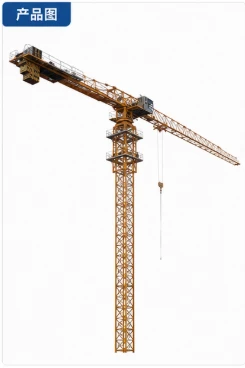
First, you have to start at the top: the governing bodies. In the United States, that’s OSHA (Occupational Safety and Health Administration) and ANSI (American National Standards Institute), with specific standards like ANSI B30.5—this one is non-negotiable for tower cranes and all their components. In the EU, it’s EN 14439, and in regions like the Middle East or Southeast Asia, most major markets align with either ISO (International Organization for Standardization) 9001 for quality or the local adopted standards, like Singapore’s SS 557 for lifting equipment. Here’s the thing: a lot of new suppliers think that if a part fits the old crane, it’s okay. But ANSI B30.5 doesn’t care about fit alone—it cares about material composition, load testing, traceability, and even how the part is marked. For example, a crane hook replacement doesn’t just need to match the old hook’s dimensions. It needs to have a proof load test of 2 times the maximum rated load, and that test has to be documented. I learned this the hard way in 2015, when we shipped a batch of hooks that were slightly under-tested for a client in Texas. OSHA audited their job site a month later, flagged the parts, and we had to rush replacement units that same week. That client still works with us today, but that mistake taught me that compliance isn’t a box to tick—it’s the foundation of every part we move.
Next, material and manufacturing compliance. This is where a lot of cut-rate suppliers skip steps to save money. For tower crane spare parts, especially load-bearing components—think sheaves, gears, brake pads, and the wire rope end fittings—materials can’t just be any steel or alloy. ANSI B30.5 specifies that load-bearing steel parts must be made of carbon or alloy steel with a minimum yield strength of 345 MPa, and non-destructive testing (NDT) is mandatory for parts thicker than 2 inches. NDT includes methods like magnetic particle inspection to catch hidden cracks, ultrasonic testing to check for internal voids, and dye penetrant testing for surface flaws. I’ve seen generic hook suppliers source steel from unvetted mills that cut on alloy content, leading to parts that bent instead of holding load under pressure. We work with mills that provide mill test reports (MTRs) for every batch of steel we use—no MTR, no part. That’s our rule, and it’s non-negotiable. Even smaller parts, like cotter pins or bolts, have to meet specific material grades: Grade 8 bolts for load-bearing connections, for example, can’t be replaced with lower-grade bolts that might snap under tension.
Traceability is another huge regulatory requirement that most people don’t talk about until an incident happens. OSHA requires that every tower crane spare part has a clear, unique mark that links it to its manufacturing batch, test records, and the original equipment manufacturer (OEM) specifications it’s made to match. For critical parts like lifting hooks, the mark has to include the part number, manufacturer’s name or code, rated load capacity, and the year of manufacture. If a part doesn’t have that mark, OSHA will reject it on site. A few years ago, a client in Florida tried to use unmarked gear parts from a cheap overseas supplier, and their job site inspector ordered all those parts removed immediately—they couldn’t prove where they came from, whether they’d been tested, or if they were rated for the crane. We keep a digital and physical trace for every part we sell: when it was manufactured, what test it passed, which mill the material came from, and even which truck it shipped on. That might sound like overkill, but when OSHA comes knocking, being able to pull up that information in 2 minutes instead of 2 hours makes all the difference.
Then there’s the specific requirement for replacement parts compatibility, especially with OEM crane models. OSHA’s standard 1926.550 (which covers cranes and derricks in construction) states that replacement parts must be “equal to or superior to the original equipment manufacturer’s specifications.” That means you can’t modify a part to cut costs—for example, if an OEM specifies a 12-inch sheave for a 5-ton crane, you can’t make it 11 inches to save on material. We work closely with crane OEMs for the most common models, like Liebherr, Potain, and Terex, to get official part specifications, but we also have our engineering team cross-reference every part to make sure it meets or exceeds OEM standards. A common mistake we see is suppliers selling “universal” parts that don’t account for slight load rating differences between crane models. Last year, we had a project in Canada where a client used a universal brake pad from a non-compliant supplier, and the brake failed during a lift, damaging a section of the crane’s jib. The investigation found the pad was 10% thinner than required, leading to reduced friction. That incident not only cost the client hundreds of thousands in repairs, but also drew OSHA fines—all because someone skipped the requirement to match OEM specs.
Testing and documentation are the final pieces of the regulatory puzzle, and they’re often the most overlooked. For parts that handle heavy loads—wire ropes, hoist motors, slewing bearings—regulators require formal third-party testing before the part can be installed. For example, wire rope has to undergo a breaking strength test to confirm it matches its rated capacity, and that test has to be done by an ISO 17025-accredited lab. Brake assemblies for tower cranes need to be tested for engagement force, stopping distance, and resistance to heat, since cranes often operate in extreme weather. We schedule third-party testing for every batch of critical parts, and we provide a full test report with every shipment to our clients. OSHA inspectors don’t care if you “think” the part works—they want the paper trail to prove it was tested. I’ve had inspectors show up to job sites while we’re unloading parts, ask for the test report, and if it wasn’t there, we’d have to hold the shipment until the report arrived. It’s extra work, but it’s worth it to keep our clients and the workers on their sites safe.
Now, I know what a lot of people in the industry think: these regulations are just red tape, designed to slow down projects and increase costs. But let’s be real—when a tower crane is lifting 10 tons 200 feet in the air, the margin for error is zero. A 1-pound bolt that doesn’t meet regulatory standards could lead to a collapse that hurts or kills someone. We’ve seen the stats: OSHA reports that crane-related fatalities account for about 20% of all construction workplace deaths in the U.S., and many of those are caused by faulty parts that didn’t meet regulatory requirements. That’s why we don’t cut corners on compliance. Every time a client tells me they’re in a rush to get parts in for a deadline, I tell them: we can ship your parts fast, but not at the cost of skipping a test or a documentation step.

If you’re a project manager, crane operator, or someone in need of compliant tower crane spare parts, I want to be the supplier you can trust. We don’t just sell parts—we sell peace of mind, knowing that every component meets all OSHA, ANSI, and regional regulatory requirements. If you have questions about a specific part, need to confirm compliance for a job site audit, or want to place an order, feel free to reach out to our team. We’re here to make sure your lifts are safe, your projects stay on track, and you never have to worry about a part being non-compliant.
Used Construction Hoist References
ANSI B30.5:2021, Cranes and Derricks—Mobile and Locomotive Cranes
OSHA 29 CFR 1926.550, Cranes, Derricks, Hoists, Hooks, Jacks, and Slings
EN 14439:2020, Cranes—Tower Cranes
ISO 9001:2015, Quality Management Systems—Requirements
OSHA, Crane-Related Fatalities in Construction, 2023 Data Brief
Tianjin Huizhi Import and Export Trading Co., Ltd.
We’re well-known as one of the leading tower crane spare parts manufacturers and suppliers in China, specialized in providing high quality customized service. Please feel free to buy cheap tower crane spare parts for sale here from our factory. Contact us for more details.
Address: Room 4175, Building D2, Zone D, Airport International Headquarters Base, Guangxuan Road, Dongli District, Tianjin, China
E-mail: admin@hugecrane.com
WebSite: https://www.hugecrane.com/
