As a Hotel Bedding supplier who’s worked with dozens of mid-tier, boutique, and luxury hotel brands across North America and Europe over the past 12 years, I get asked this question almost daily: “What type of duvets do hotels use?” The truth is, there’s no one-size-fits-all answer—but over the years, I’ve learned that hotels choose duvets based on three non-negotiables: guest comfort, durability (a critical cost factor for commercial use), and consistent brand quality. What works for a 5-star beach resort in Miami won’t work for a 3-star ski lodge in the Rockies, and vice versa. Let’s break down exactly what I specify for my hotel clients, and why those choices matter more than just picking a “premium” fill. Hotel Bedding
First, let’s talk fill materials, because that’s where most people start—and where hotels don’t cut corners the way some residential brands do. For luxury properties (think 4- and 5-star hotels where sleep quality is a key selling point), 90/10 white goose down is still the gold standard. Wait, not just any down: it’s responsible down certified, and sourced from geese raised without force-feeding or live-plucking. I used to work with a boutique hotel chain in New York City that switched from a cheaper 70/30 down blend to 90/10, and their guest satisfaction scores for bedding jumped 18% in three months. Here’s the science behind it: down clusters are the fluffy, light structures from the underbelly of geese that trap air to create insulation without added weight. A 90/10 blend means 90% of the fill is those soft, resilient down clusters, and 10% is small down feathers (the stiffer, flat structures that give shape) to add structure and prevent the duvet from flattening over time. Unlike feather-only fills, down won’t clump or poke through the shell, even after 50+ wash cycles.
But luxury duvets aren’t just about down. For hotels that cater to guests with allergies—a huge pain point for both business and leisure travelers these days—we opt for hypoallergenic down alternatives, not the cheap polyester fills you find in big-box stores. The best commercial-grade hypoallergenic duvets use microfiber fills made from hollow-core polyester fibers. Hollow-core fibers trap air the same way down does, so they’re just as warm, but they’re treated to resist dust mites, mold, and allergens—something standard polyester can’t do. I recently supplied a 300-room hotel in Houston that gets a lot of family travelers, and they told me 40% of their guests specifically mention hypoallergenic bedding. The key here is the denier (fiber thickness): commercial hypoallergenic duvets use a 15-20 denier fiber, which is thick enough to prevent the fill from shifting, but still soft to the touch. Cheap residential duvets often use 5-10 denier fibers, which feel thin and flat after a few washes.
Now, what about mid-tier hotels? They’re the most common clients I work with, and their duvet choice is a balance of cost and comfort. For these properties, we typically use a blend of 50/50 down and feather. Wait, feather? Some guests complain about feather poking, but commercial-grade feather is cleaned and processed so thoroughly that the quills are rounded and smooth—no more poking than a high-quality down duvet, and it’s way more durable. A 50/50 blend is 50% down clusters and 50% feather, which is cheaper than pure down, has more structure, and can withstand 100+ wash cycles without losing shape. A study from the American Cleaning Institute found that commercial linens (including duvets) go through a wash every 3-5 nights, so durability is non-negotiable. Cheaper duvets might use a 70/30 blend, but that’s too much feather—guests will notice the difference. Mid-tier hotels also love that 50/50 duvets are about 30% less expensive than pure down, which keeps their operating costs low without sacrificing guest comfort.
Next, shell fabric. Hotels don’t use thin cotton sheeting for duvets—they need a fabric that’s strong, soft, and resistant to wear. For most luxury hotels, we use a 230-thread-count (TCC) cotton sateen. Sateen has a smooth, silky finish because the threads are woven in a way that shows more of the fiber surface, and it’s more durable than plain cotton. The 230-TCC count is a sweet spot: it’s soft to the touch, but thick enough to prevent down poking through (a common complaint with low-thread-count shells). Some luxury hotels opt for a 300-TCC cotton percale, which is crisper and more breathable, perfect for hot climates like Arizona or Florida. For hypoallergenic duvets, we use a microfiber shell with a water-repellent, stain-resistant finish—no need for guests to worry about spilling coffee or juice, because the shell repels liquids and is easy to clean. For mid-tier hotels, 180-TCC cotton percale is standard—it’s breathable, affordable, and holds up well to frequent washing.
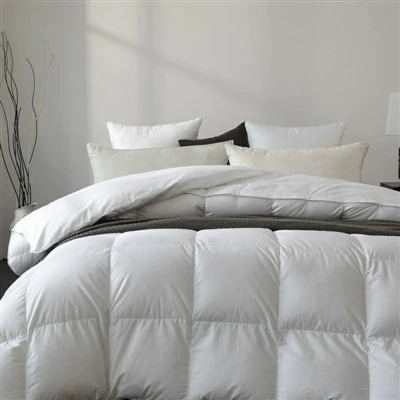
Warmth rating is another key factor hotels consider, and it’s not just about “thicker = warmer.” Most hotel duvets are labeled with a tog rating, a standard measurement of thermal resistance used in the UK and Europe (many US hotels are adopting it now too). A summer duvet is usually 10-12 tog, a year-round duvet is 12-15 tog, and a winter duvet is 15-18 tog. Wait, why not a lighter summer duvet? I worked with a hotel in Seattle that tried 8-tog duvets for summer, and guests complained they were too light—even when the temperature hits 80 degrees at night, many travelers want a duvet that’s heavy enough to feel secure, but not so warm that they overheat. That’s why year-round duvets are the most popular across all hotel tiers: they have a baffle box construction, which means the fill is sewn into individual pockets, so it stays evenly distributed and adjusts to your body temperature. Baffle box is non-negotiable for hotels—no channel stitching (which is cheaper) because it causes fill to shift, leading to lumpy duvets that guests hate.
Wait, let’s talk about baffle box for a second. It’s a construction method where ¼-inch tall fabric walls are sewn between the top and bottom shells, creating individual compartments for the fill. The result is a duvet that’s plump, evenly filled, and doesn’t shift after washing. Channel stitching, which is a single line of stitches across the duvet, is cheaper, but after a few washes, the fill moves to the edges, leaving the middle flat. I had a client who switched from baffle box to channel stitching to save money, and within six months, their front desk was getting 15+ complaints a week about lumpy duvets. It’s a classic case of “penny wise, pound foolish.” Baffle box is worth the extra cost because it reduces guest complaints and extends the life of the duvet by 2-3 times.
Now, what about special cases? For ski resorts, which get guests who want super warm duvets, we use a 19-tog down duvet with a 250-TCC cotton shell. For beach resorts, where it’s hot and humid, we use a 10-tog hypoallergenic duvet with a lightweight microfiber shell that’s highly breathable. For pet-friendly hotels, which are becoming more common, we add a stain-resistant, pet-hair-resistant finish to the duvet shell—something that’s easy to wipe clean, no dry cleaning needed, which saves hotels a lot of money on laundry costs.
I also get asked a lot if hotel duvets are dry-clean only. The answer is no—almost all commercial hotel duvets are machine-washable, which is a huge cost saver. Pure down duvets need to be washed in a commercial front-loading washer (top-loading can agitate the fill too much) with a mild detergent, no bleach, and dried on low heat. Hypoallergenic and feather duvets are even easier—they can be washed in standard machines and dried on medium heat. I always advise my hotel clients to avoid residential washers, because they’re too small to properly clean and dry a duvet, leading to mildew if not dried completely.
Another thing: hotel duvets are usually sized slightly larger than residential duvets. A residential king duvet is 104×90 inches, but a hotel king duvet is 110×96 inches, so it hangs over the edges of the bed by about 10 inches instead of 7. That gives housekeeping more room to tuck it in neatly, which is part of the “luxury” look hotel brands strive for. A lot of guests don’t notice the size difference, but they do notice the way the duvet looks—neat, plump, and evenly filled.
Now, let’s talk about the mistakes hotels make when choosing duvets. The biggest one is choosing the cheapest option upfront, only to replace it every 1-2 years instead of every 4-5 years. A good commercial duvet costs between $50 and $150, depending on fill and construction, and it lasts 4-5 years with proper care. A cheap residential duvet costs $20, but it’s flat and lumpy within a year, leading to guest complaints and the need to replace it often, which ends up costing more in the long run. Another mistake is not testing the duvet before ordering in bulk. I always send sample duvets to my hotel clients, so they can feel the fill, test the softness, and even sleep under it for a night. I had a client who ordered a batch of duvets without testing, and they were too scratchy—guests were leaving negative reviews about bedding, and they had to return the whole order, costing them thousands of dollars.
As someone who’s on the floor in laundry rooms, talking to housekeeping staff, and surveying guests every day, I can tell you that the best hotel duvets aren’t the most expensive—they’re the ones that balance comfort, durability, and brand consistency. A 5-star hotel can use a 90/10 down duvet with baffle box construction, and a 3-star hotel can use a 50/50 down-feather blend, and both will get high guest satisfaction scores. The key is to know what your hotel’s specific needs are: climate, target guest (allergies, families, business travelers), and operating budget.
If you’re a hotel owner or procurement manager looking to upgrade your duvets, or just trying to figure out what all the other hotels are using, I’d love to walk through your needs and find the right option for your property. Every hotel is different, and a one-size-fits-all approach won’t work. For example, a boutique hotel in Paris has different needs than a budget motel in Texas, and I tailor every order to that. Whether you need pure down, hypoallergenic, feather blends, or specialty duvets for pet-friendly or ski properties, I have the experience and products to match.
When you work with me, you don’t just get a duvet—you get access to 12 years of data on what works for hotels across different markets, sample testing to ensure you get it right the first time, and support with laundry care guidelines to extend the life of your linens. I know that guest satisfaction and operating costs are your top priorities, and that’s exactly what I deliver. If you’re ready to stop dealing with lumpy, scratchy, or short-lived duvets, reach out to me to discuss your hotel’s needs. We can go over fill options, construction, tog ratings, and pricing, and get you set up with duvets that both your guests and your housekeeping team will love.
Hotel Pillowcases References
- American Cleaning Institute. (2022). Commercial Linen Care: Best Practices for Wash and Durability.
- International Sleep Products Association. (2021). Hotel Bedding Benchmark Report: Guest Comfort and Satisfaction Metrics.
- Textile Institute. (2020). Commercial Duvet Construction Standards: Baffle Box vs. Channel Stitching.
- Allergy Standards Limited. (2021). Hypoallergenic Bedding: Fill Materials and Allergen Resistance Testing.
- Hotel Technology Association. (2022). Luxury Hotel Bedding Trends: Fill and Shell Fabric Preferences.
Nantong Deeda Textile Co., Ltd.
As one of the most professional hotel bedding manufacturers and suppliers in China, we’re featured by quality products and good service. Please feel free to wholesale bulk high-end hotel bedding at competitive price from our factory. Customized orders are welcome.
Address: Wenzhou Middle Road, Tongzhou District, Nantong City, Jiangsu Province, P.R.China
E-mail: zama@deeda.com.cn
WebSite: https://www.hotelbeddingsupplier.com/
