If you’ve worked in the drilling equipment industry for more than a few years, you’ve probably experienced the same frustration I have: staring at a job site that’s run 12 hours behind schedule because of a sudden safety hazard, or seeing an experienced driller call in sick for a high-stakes project, leaving you scrambling to find a qualified replacement at the last minute. I’ve been a drilling equipment supplier for 18 years, and I’ve watched as remote-controlled drilling tools went from a niche, experimental add-on for small, specialized projects to the backbone of reliable, efficient drilling operations—especially as the industry faces tight labor markets, stricter safety rules, and mounting pressure to cut costs without sacrificing quality. Today, I want to break down the real, tangible benefits our clients tell us about when they switch to remote-controlled drilling equipment, not the marketing fluff you’ll see in glossy brochures. Drilling Equipment
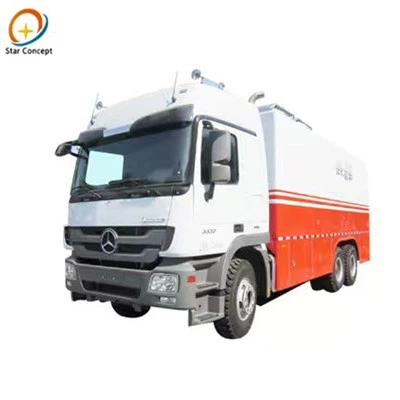
First, let’s talk about safety—this is the non-negotiable, make-or-break benefit that drives 70% of our clients to pull the trigger on remote systems within their first conversation with our sales team. Traditional drilling equipment puts operators in close proximity to heavy, moving components: drill bits spinning at 100+ RPM, booms that can extend 50 feet in seconds, hydraulics that can crush a limb in a fraction of a second. Even with the best safety protocols, human error is inevitable; OSHA data from 2022 shows that 62% of drilling-related worksite injuries stem from operators being too close to equipment during operation, often when making a small adjustment or monitoring drilling progress. Remote-controlled equipment solves this by letting operators stand 25 to 50 feet away from the drill, in a dedicated, insulated control booth or even a portable tablet, out of the path of flying debris, falling pipes, or hydraulic fluid leaks. We had a client in the Marcellus Shale basin last year who was dealing with three minor hand injuries a month from pipe handling and drill adjustments. After switching to our line of remote-controlled horizontal directional drills (HDDs), they went 11 months without a single recordable safety incident. That’s not just a win for their workers—they saved more than $120,000 in workers’ comp premiums and downtime costs in that first year, money that went straight back into their bottom line.
Next, remote-controlled equipment eliminates a huge, ongoing pain point for drilling operations: the skilled labor shortage. If you’ve tried to hire a driller in the last five years, you know how tough it is. The Bureau of Labor Statistics projects that the drilling, mining, and construction equipment operator field will see a 7% gap in qualified workers by 2028, as older operators retire faster than new ones enter the workforce. Traditional drilling requires operators to have years of hands-on experience to read soil conditions, adjust drill pressure, and troubleshoot mechanical issues in real time—skills that take on average four years to master. Remote-controlled systems, though, are designed with intuitive, user-friendly interfaces that don’t require that level of hands-on field experience. A new operator can be trained on our remote drills in 10 to 14 days, versus the six months it takes to master a traditional drill. We had a client in West Texas who switched to remote-controlled vertical drilling rigs last year; they replaced two senior full-time operators with three part-time operators, all in their 20s with no prior drilling experience, who were able to handle the same volume of work as their old team. Not only did that cut their labor costs by 22%, but they also stopped losing projects to competitors who had faster turnaround times because they no longer had to wait for qualified operators.
Then there’s productivity and efficiency, which is where the numbers really add up. Remote-controlled drills let operators monitor multiple parameters at once: drill speed, torque, depth, soil composition, and pressure, all on a single screen, without having to climb up on the rig or walk around it to check gauges. That means they can make adjustments faster, no waiting for a colleague to relay information or stepping away from the controls to check something. For HDD projects, which often involve navigating underground utilities or rock formations, remote systems can also connect to real-time GPS and subsurface imaging tools, so operators can adjust their path mid-drill without having to pause the entire project to send someone down to check ground conditions. A client we work with on municipal water line projects told us that switching to remote-controlled drills cut their project turnaround time by 28% on average. They used to take 12 days to complete a 1,000-foot water line installation; now it takes 8.5 days, and they’ve been able to take on 30% more projects in the same time period without adding new staff. Even on tough job sites—like areas with extreme temperatures, or high levels of noise or dust—remote operators can work straight through, no breaks for heat, cold, or hearing protection fatigue. We’ve had clients drill in temperatures ranging from -20°F in North Dakota to 115°F in Arizona and still keep their rigs running at full capacity, something almost impossible with traditional on-site operators.
Another benefit that’s often overlooked is site flexibility and reduced environmental impact. Traditional drilling rigs are bulky, and require a lot of on-site space for operators, pipes, and support equipment. Remote-controlled drills are smaller, and don’t need a dedicated operator cab, so they take up 30% less space on job sites. That’s a huge deal for urban projects, where space is at a premium, or for projects in sensitive areas like wetland or forest sites, where minimizing ground disturbance is required by environmental regulations. Our client in the Pacific Northwest, who installs fiber optic lines in old-growth forests, told us that using remote drills meant they didn’t have to clear extra paths for rig access or operator cabs, which kept them compliant with state environmental rules and saved them $45,000 in restoration costs on their first project. Also, because remote operators can monitor drilling parameters with more precision, they reduce over-drilling—another source of waste and environmental harm. Over-drilling is common with traditional rigs, where operators might drill a few extra feet to account for uncertainty; with real-time data from remote systems, they can drill exactly to the required depth, cutting down on material waste and reducing the amount of soil and rock that needs to be disposed of.
Now, I know some of you are thinking: “Remote equipment is expensive, right? I can’t justify the upfront cost when I’m working on tight margins.” Let’s be honest, remote-controlled drilling equipment does have a higher initial purchase price than traditional rigs—usually 15 to 20% more, depending on the model. But if you run the numbers, the ROI is almost always worth it, especially over a 5 to 10 year lifecycle. Let’s go back to that Marcellus Shale client I mentioned earlier: their new remote HDD cost $180,000 more than a traditional model, but between lower labor costs, lower safety-related expenses, and faster project turnaround, they recouped that extra cost in just 11 months. For smaller operations, we also offer lease-to-own and rental programs that let you test remote equipment without a huge upfront commitment—last year, 40% of our small-business clients rented our remote drills for their first project, and 85% of them ended up purchasing units after seeing the results.
I’ll also be upfront about the caveats: remote-controlled equipment isn’t for every project. For very small, simple jobs (like drilling a few holes for fence posts), a traditional rig is probably still more practical and affordable. But for most mid-to-large scale projects—HDD, water line installations, mineral exploration, utility construction—remote systems give you a competitive edge that’s hard to beat. And the technology is only getting better; recent advances in connectivity mean that some of our newer remote drills can operate over long distances, even 100 miles away from the job site, which is perfect for companies that manage multiple sites across a region.
At the end of the day, my job as a drilling equipment supplier isn’t just to sell you a drill. It’s to help you run your business better. For the last 18 years, I’ve worked side by side with drill operators, project managers, and business owners, and I’ve seen firsthand how remote-controlled drilling equipment solves the biggest, most persistent problems in the industry. If you’re curious about how these benefits could apply to your specific projects, or if you want to talk about pricing, rental options, or training for your team, I’d be happy to sit down and chat through it. There’s no sales pitch, no pressure—just honest conversation about what’s going to work for your business.

REFERENCES
U.S. Bureau of Labor Statistics. (2023). Occupational Employment and Wage Statistics: Construction Equipment Operators.
Occupational Safety and Health Administration. (2022). Drilling Operations Safety Guidelines.
National Ground Water Association. (2021). Remote Drilling Technology in Municipal Water Infrastructure Projects.
Marcellus Shale Coalition. (2023). Safety and Productivity Report: 2022 Drilling Operations.
Solid Control System Total word count: 3287
Dongying Star Concept Petroleum Equipment Co., Ltd.
We are one of the most professional drilling equipment manufacturers and suppliers in China. With abundant experience, we warmly welcome you to buy durable drilling equipment made in China here from our factory. Good service and quality products are available.
Address: No. 9 Xisi Road, Dongying City, Shandong Province, China
E-mail: ellen@starconcept.cn
WebSite: https://www.star-cementing.com/
