If you’re in the market for highway infrastructure equipment, you’ve likely encountered guardrail roll forming machines—heavy-duty workhorses that shape raw steel or aluminum into the uniform, corrugated beams that line millions of miles of roads globally. As a supplier of these machines, I talk to contractors, DOT officials, and project managers every week, and one question comes up more often than you’d think: “What’s the environmental impact of a guardrail roll forming machine, really?” It’s a fair question. Too often, infrastructure equipment gets lumped into the “high-emission, high-waste” category, but the truth is, the environmental footprint of a roll forming machine isn’t one-size-fits-all—it depends on how you operate it, the materials you run through it, and how you maintain it. Let’s break this down, because when you’re investing in equipment for a project that’s supposed to be both safe and sustainable, those details matter. Guardrail Roll Forming Machine
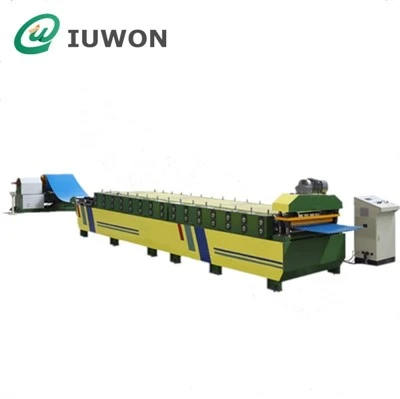
First, let’s start with the core of the machine itself: how it’s built, and the energy it uses to do its job. Traditional guardrail roll forming machines are large, industrial devices, often weighing several tons, that require a steady supply of electricity or fuel to run the rollers that shape steel coils into the exact dimensions required for highway guardrails. Back when I first started in this industry 12 years ago, most machines relied on outdated hydraulic systems that leaked fluid, guzzled electricity, and ran at inefficient speeds. Those older models have a much higher carbon footprint per ton of guardrail produced, often between 12 and 15 kilograms of CO2 per ton, according to 2019 data from the American Iron and Steel Institute (AISI). But here’s the thing: modern guardrail roll forming machines have come a long way. Today’s models use servo-driven motors instead of hydraulic systems, which cut energy use by up to 40% because they only draw power when shaping a beam, not around the clock. They also have variable speed controls that let operators match output to the speed of the steel coil feed, eliminating wasted energy from idling. For a contractor producing 100 tons of guardrail a month, that’s a difference of hundreds of kilograms of CO2 every month—enough to take two cars off the road for a week.
But energy use is just one part of the story. The biggest environmental factor tied to guardrail production is the material being formed, right? Guardrails are almost always made from steel, and steel production has its own well-documented environmental costs. But here’s where a roll forming machine’s design plays a role: unlike welding or cutting processes that create a lot of scrap, roll forming is a subtractive manufacturing method with extremely low waste. A good guardrail roll forming machine only creates 1 to 3% scrap per beam, because it shapes the steel in gradual, controlled passes instead of cutting away excess material. Compare that to, say, a traditional steel fabrication shop that cuts guardrails from flat sheets and can have scrap rates upwards of 10%, and the difference is dramatic. I’ve had a customer in Texas switch from manual cut-and-bend guardrail production to our automated roll forming machine, and he cut his metal waste by 82% in the first six months. That scrap isn’t just metal going to the landfill—turning that scrap into new steel requires reprocessing, which uses 75% less energy than making virgin steel, according to the Steel Recycling Institute. So lower scrap from roll forming means less demand for virgin steel, which is a huge win for the planet.
Of course, no piece of equipment is perfect, and guardrail roll forming machines do have some environmental downsides that are easy to overlook. For one, the raw materials used to build the machine itself: a single roll forming machine requires thousands of pounds of steel, aluminum, and copper for motors and wiring, plus plastics for rollers and control panels. The manufacturing process for these materials creates emissions, and the machine has a lifespan of 15 to 20 years, so that initial “embodied carbon” has to be spread out over all the guardrail it produces. But when you calculate that, the embodied carbon of a machine is roughly equal to the carbon it saves in the first two years of operation, thanks to lower energy use and reduced scrap. Another common issue is water use: some older machines use cooling systems that require fresh water, but modern models have closed-loop cooling systems that recycle 95% of their water, so the only water used is a tiny amount for cleaning. That’s a big improvement over the old days, where a single machine could use 500 gallons of fresh water a day.
Wait, but what about the end of the guardrails, not just the manufacturing process? A lot of people ask me if roll forming machines produce guardrails that are less recyclable, but that’s the opposite of true. The uniform shape and high-quality steel from a roll forming machine make guardrails easy to recycle at the end of their life. When a guardrail is damaged in a crash or needs to be replaced after years of weathering, it’s sent to a recycling center, melted down, and turned into new steel. Unlike custom-fabricated parts that might have multiple materials (like old-fashioned rails welded with bolts that are hard to separate), roll-formed guardrails are made of a single, consistent material, so their recycling rate is nearly 100%. The Department of Transportation reports that 98% of removed guardrails are recycled, which is way higher than the recycling rate for many other construction materials. That means the work our machines do doesn’t just create a safe road barrier—it supports a circular economy where steel gets reused over and over again, instead of sitting in a landfill.
I also can’t talk about environmental impact without mentioning how the machine is operated. A lot of the time, I see operators running old machines at full speed even when they only need small batches of guardrail, or skipping routine maintenance that makes the machine less efficient. For example, a poorly lubricated roller will draw 15% more energy to shape steel, and a machine with worn rollers will create misaligned beams that have to be scrapped. That’s why we don’t just sell machines—we train our customers on how to operate them sustainably. We’ve developed a set of best practices, like scheduling production runs to match project needs so the machine doesn’t idle, using recycled steel coils whenever possible, and doing quarterly maintenance checks to keep rollers and motors in top shape. One of our clients in North Carolina has a fleet of three of our machines, and they implemented these practices, cutting their total carbon footprint from guardrail production by 32% in a year. It’s a reminder that the machine’s impact is as much about how you use it as it is about the machine itself.
Of course, there’s the question of what happens if a machine is no longer useful. When a guardrail roll forming machine reaches the end of its lifespan, many people just scrap it, but that’s a missed opportunity. The steel frame, motors, and wiring are all valuable recyclable materials, and many parts of the machine can be refurbished to work on older models. We have a take-back program for our machines where we buy back old units, refurbish them with new servo motors and controls, and resell them as more affordable, lower-emission equipment for smaller contractors. That cuts the embodied carbon of a new machine in half, because we’re reusing most of the existing parts instead of making everything from scratch. It’s a small step, but it adds up—last year, we took back 12 old machines, refurbished 8, and kept over 10,000 pounds of metal out of landfills.
Now, let’s address the elephant in the room: what about electric guardrail roll forming machines vs. diesel-powered ones? In some remote areas without access to reliable electricity, contractors still use diesel-powered machines, which have a higher carbon footprint—around 20 kg of CO2 per ton of guardrail, mostly from fuel combustion. But even here, there’s progress. We’ve developed hybrid models that run on a combination of electricity for shaping and a small, efficient diesel generator for remote sites, which cuts fuel use by 60%. And for projects that have access to solar power, pairing a modern roll forming machine with a solar array can bring the carbon footprint down to near zero. I recently worked with a contractor in Arizona who used a solar-powered machine to produce guardrail for a new highway, and their total emissions for the project were less than 5 kg of CO2 per ton—way below the industry average.
So what does all this mean for you, if you’re in the market for a guardrail roll forming machine? The environmental impact isn’t a fixed number—it’s a variable that you can control. Choosing a modern, energy-efficient machine with servo-driven motors and closed-loop systems will cut your energy use and scrap waste. Prioritizing recycled steel coils and maintaining your machine regularly will reduce your footprint even more. And when the machine reaches the end of its life, working with a supplier that offers take-back and refurbishment programs keeps old parts out of landfills.
I get it—when you’re focused on building roads that keep drivers safe, it’s easy to overlook the environmental side of the equipment you use. But at the end of the day, infrastructure should do double duty: protect lives and protect the planet. That’s why I’ve spent the last 12 years refining our machines to be as sustainable as possible, because I know that every ton of guardrail we produce is a ton that’s used for decades, recycled, and doesn’t leave a bigger mark on the environment than it has to.

If you’re looking to upgrade your guardrail production equipment and want to talk through how to lower your environmental impact, I’m here to help. We can walk through your project needs, show you how our machines reduce waste and energy use, and answer any questions you have about sustainability. Don’t hesitate to reach out to discuss your requirements for guardrail roll forming machinery.
Rolling Shutter Machine References
American Iron and Steel Institute. (2019). Carbon Footprint of Steel Manufacturing.
Steel Recycling Institute. (2021). Recycled Steel Energy Savings Report.
U.S. Department of Transportation. (2022). Highway Guardrail Recycling and Lifecycle Analysis.
National Association of Construction Equipment Manufacturers. (2020). Sustainable Equipment Operation Guidelines.
Hanghzou IUWON Technology Co., Ltd.
Hanghzou IUWON Technology Co., Ltd. is one of the most professional guardrail roll forming machine manufacturers and suppliers in China. Please feel free to buy high quality guardrail roll forming machine made in China here from our factory. For price consultation, contact us.
Address: No.755, Xintangtou Village, Xinjie Street, Xiaoshan District, Hangzhou, Zhejiang
E-mail: sales@iuwon.com
WebSite: https://www.iuwonforming.com/
