As a POF shrink film supplier, I’m often asked by my customers and potential clients: “What types of sealing machines actually work best with POF shrink film?” It’s a great question—and one that’s not as straightforward as it might sound, because POF (polyolefin shrink film) is different from other common shrink films like PVC or polyethylene. If you use the wrong sealing machine, you’ll end up with weak seals, film that tears during shrinking, or even seals that break open entirely when a product is placed on it. I’ve spent years testing equipment, troubleshooting for clients, and matching the right tools to their specific POF applications, so today I want to break down the most common (and effective) sealing machines for POF, how they work, when to use each, and what to watch out for. POF Shrink Film
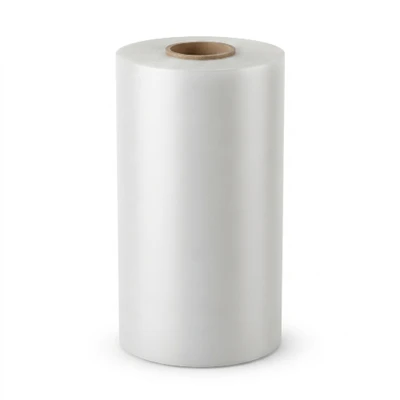
First, let’s recap why POF has unique sealing needs. Unlike PVC, which melts at a relatively low temperature and is flexible, or LDPE, which seals well with basic heat, POF is a cross-linked polyolefin. That means it requires precise heat, consistent pressure, and the right dwell time to form a tight, durable seal that won’t crack when the film shrinks. If the seal is too thin or too hot, it will break; if it’s too cold or not pressed long enough, moisture or dust will get inside the package, ruining the product. This specificity is why not every sealing machine works with POF, and why choosing the right one is critical for both small batches and high-volume production.
Let’s start with the most versatile and widely used option for small to medium operations: the Manual Impulse Sealer. I see these all the time for startups, craft businesses, and even small food operations that use POF for packaging snacks, candles, or small retail goods. How does it work? It’s a simple handheld or tabletop device with a heating wire (called an impulse element) that runs along the sealing bar. When you press the bar down onto the POF film, the wire heats almost instantly, melts the two layers of film together, and then cools rapidly—all in a fraction of a second, thanks to a spring-loaded mechanism that releases pressure once the cycle is done.
For POF, the key here is adjusting the heat and seal time. I always tell new users that POF needs a bit more heat than PVC—usually around 120 to 150 degrees Celsius, depending on the thickness of your film (we supply POF in gauges from 30 to 80 microns, so thicker film needs a bit more heat). The impulse sealer is great for custom or low-volume jobs, because you can cut and seal in one step (if you get a model with a built-in cutter). But the downside is that it’s not ideal for very high volume—you’re limited to how many seals you can make per hour, since each one requires you to manually press and release the bar. I once had a customer who tried to use a cheap impulse sealer for his 500-unit candle line, and he ended up with 20% of his seals breaking during shipping. The issue? He set the heat too low because he was used to PVC, and didn’t realize POF needs a longer dwell time. Once he adjusted that, his success rate went up to 98%. That’s the kind of small adjustment that makes all the difference.
Next up: Semi-Automatic Continuous Band Sealers. These are the workhorses for medium to high-volume operations—think packaging lines for cosmetics, book sets, or small electronics. A continuous band sealer uses a heated, moving Teflon-coated belt that pulls the POF film through the machine as you feed it in. The heat is applied evenly along the band, and pressure rollers press the film closed as it exits, creating a continuous, airtight seal that’s consistent every time. For POF, these machines are often the sweet spot because they let you adjust speed, heat, and pressure independently—something impulse sealers can’t do as precisely.
What makes them good for POF specifically? POF shrinks tightly when heated, so the seal needs to be uniform across the entire width. A band sealer eliminates the variation you get from manual pressing—each seal is identical, which is critical if you’re using a shrink tunnel (which I’ll talk about later) to heat the film. I have a client who runs a small beverage brand, and he switched from impulse sealers to a semi-automatic band sealer when his order volume jumped from 100 units a week to 1,000. Before, he had to have two people pressing seals all day; now, one person can feed the film into the machine while the rest of the line runs. The seals are so consistent that his shrink wrap job on the bottles is tight and professional, no messy gaps or weak spots. That said, semi-automatic band sealers do require a bit more setup than manual models—you have to calibrate the heat for your POF gauge, and make sure the belt is tensioned correctly to avoid creasing the film. It’s not hard, but it’s worth working with your supplier to get the settings right, especially if you’re using a thicker POF film.
For operations that need even higher volume—like large-scale retail packaging, food production, or industrial goods—there’s the Fully Automatic L Sealer (often paired with a shrink tunnel). This is probably the most advanced sealing machine for POF, and it’s designed for end-to-end automation. An L sealer cuts the POF film into the exact size you need, applies pressure to create a tight seal along the three edges of the “L,” and then feeds the sealed package into a shrink tunnel that heats the film to shrink around the product. The entire process is controlled by a PLC (programmable logic controller), so you can adjust settings for different products without stopping the line.
POF is ideal for L sealers because it shrinks at a lower temperature than PVC, which means the tunnel can be set just high enough to shrink the film without damaging sensitive products like small electronics or baked goods. I supply a lot of POF to customers who use L sealers for frozen food packaging, and the key here is that the seal has to be strong enough to hold up during freezing and transport. A bad seal on a frozen package can let moisture in, leading to freezer burn, or the film can tear during the shrink process. The best L sealers for POF have heated seal bars with Teflon coating to prevent the film from sticking, and adjustable pressure to make sure the two layers of POF are pressed together tightly enough. One of my clients in the toy industry produces 10,000 units a day, and switching to a fully automatic L sealer cut their packaging time by 70% and reduced seal defects to less than 0.5%. That’s the level of consistency you get with the right machine for high volume.
Wait, I should also mention a type of sealer that’s often overlooked but perfect for specialty POF applications: the Hot Knife Sealer. This is used for thicker POF film, usually over 80 microns, or for sealing large, irregularly shaped products. A hot knife sealer uses a heated blade to both cut and seal the film in one step—so when you press the blade through the POF, the heat melts the edges, sealing them as it cuts. This is great for applications like wrapping large furniture, industrial parts, or even palletizing with POF stretch film. I have a customer who builds custom outdoor furniture, and he uses hot knife sealers to wrap his 10-foot-long tables. A standard band sealer can’t handle that size, and an impulse sealer would take too long to seal the ends of the large film pieces. The hot knife sealer cuts through the thick POF in seconds, and the seal is strong enough to keep water and dust off the furniture during shipping and storage. The biggest tip here is to use a serrated hot blade, not a smooth one—smooth blades can cause the POF to stretch too much, leading to weak seals.
Now, let’s talk about the most common mistakes I see when pairing sealing machines with POF. First, using a sealer designed for PVC only. A lot of new packaging businesses buy a cheap sealer they used for PVC and assume it works for POF, but as I mentioned earlier, POF needs higher heat and a longer dwell time. Last year, a small e-commerce brand reached out to me because their POF shrink wrap kept breaking during transit, and it turned out they were using a PVC sealer set to 100 degrees Celsius—way too low for POF, which needs at least 120. Second, not calibrating the machine for POF gauge. POF comes in different thicknesses, and a setting that works for 30-micron film will be too hot for 50-micron, or not hot enough for 80-micron. I always provide a quick guide with every roll of POF I supply, listing recommended heat settings for different sealers, but I also encourage customers to test small batches first—don’t run a full order until you’ve checked a few seals to make sure they’re strong.
Another thing to consider is whether you need a seal that’s tamper-evident. A lot of food and pharmaceutical clients use POF because it’s clear, durable, and can be made into tamper-evident seals. Some sealing machines—especially higher-end L sealers—have settings that create a perforated edge or a breakable seal, so if someone tries to open the package, it leaves a visible mark. That’s a big plus for industries that need to comply with safety regulations, and it’s something to ask about when choosing your sealer.
Now, let’s circle back to what I’ve learned as a POF supplier. The best sealing machine for you depends on three things: your order volume, the size and type of products you’re packaging, and your budget. If you’re a small business with 100 units a week, a manual impulse sealer is more than enough, and it’s affordable. If you’re producing 1,000 to 5,000 units a week, a semi-automatic band sealer is the sweet spot—consistent, not too expensive, and easy to operate. For high-volume production of 10,000 units or more, a fully automatic L sealer paired with a shrink tunnel is worth the investment. And for large or irregular products, a hot knife sealer is the way to go.
I always tell my customers that POF is one of the best shrink films on the market, but only if you pair it with the right equipment. A great roll of POF is wasted if your sealing machine can’t make a strong, consistent seal. I’ve seen too many businesses cut corners on sealing equipment, only to end up with damaged products, unhappy customers, and extra costs from reworking packages. That’s why I work closely with every client I supply POF to, not just to sell them film, but to advise them on which sealing machine will work best for their specific needs. Whether you’re just starting out and trying to figure out your first sealer, or you’re expanding and need to upgrade to higher-volume equipment, I’m here to help.
If you’re ready to upgrade your packaging process, or you have questions about which sealing machine is right for your POF shrink film application, I’d love to connect with you. We can talk through your volume, product types, and budget, and I can share more tips on how to get the most out of your POF film and sealing equipment.
PE Shrink Film References:
- "Shrink Film Technology and Applications", Industrial Packaging Association, 2021.
- "POF Shrink Film: Properties and Processing Guidelines", Polyolefin Packaging Council, 2022.
- "Sealing Equipment Selection for Shrink Packaging", Packaging Engineering Journal, Vol. 43, No. 2, 2020.
- "Quality Control for Shrink Seal Integrity in Consumer Packaging", Journal of Packaging Science and Technology, Vol. 15, No. 3, 2021.
Shanghai Ruiyue Plastic Products Co., Ltd.
With abundant experience, we are one of the most professional POF shrink film manufacturers and suppliers in China. We warmly welcome you to buy high quality POF shrink film in stock here from our factory. If you have any enquiry about customized service, please feel free to email us.
Address: No. 1000, Lixue Road, Malu Town, Jiading District, Shanghai
E-mail: shenyang.boss@ruiyueplastics.com
WebSite: https://www.ruiyueplastics.com/
